There’s a quiet revolution happening on Britain’s roads. In towns, cities, and along motorways, electric vehicle (EV) chargers are multiplying at a pace few would have predicted even a few years ago. As of January 2026, the UK now boasts around 88,500 public charging points spread across more than 45,000 locations, with 765 rapid charging hubs alone, defined as sites with several high‑speed chargers clustered together: up a huge 41 % in a single year.
Yet, while this dramatic expansion of EV infrastructure is a technical achievement, for many drivers it remains largely invisible, literally. The signage infrastructure just isn’t there. Unlike ubiquitous signs for petrol stations, that pepper Britain’s arterial road network, EV charging wayfinding is inconsistent at best, and absent at worst, especially on major A‑roads and motorways. Signage needs to be a key part of UK EV infrastructure.
That matters, because absence, as much as availability, shapes mainstream driver perception. What do we need? Electric vehicle road signage. When do we need it? Now.
Seeing the Change: The Psychological Geography of EV Charging
Drivers’ confidence to switch to electric isn’t just built in garages or showrooms, it’s reinforced on the road. When motorists see clear, repeated signage for “EV Charging” along key routes, it does more than direct them to a hub: it signals transformation in motion.
For a mainstream audience the vast middle of the market that sits between early adopters and hesitant buyers, visibility matters. Policymakers and industry insiders have long focused on network density and charging speed, but what drivers experience day‑to‑day are signs and wayfinding. A road map dotted with familiar petrol pump symbols assures even the most cautious driver they won’t be stranded. The absence of similarly prevalent EV road sign icons can reinforce “range anxiety” even when plenty of public chargers exist.
In this sense, charging signs are more than wayfinding tools, they are cultural signifiers. Each clearly marked charging symbol on a roundabout approach, on motorway gantries or at junctions tells the public that emobility isn’t a distant future, but a very present reality.
Charger Numbers You Can See, and Believe
The raw growth of the UK’s charging network already tells a compelling story. Over the past year, more than 14 000 new charge points were added to the public network, representing a nearly 20 % increase in total capacity. Most notable is the surge in ultra‑rapid chargers; devices capable of delivering 150 kW and above, which grew by more than 40 % year‑on‑year and are often concentrated along major routes and service areas. Signage needs to reflect this to give prospective EV drivers the confidence to change.
Numbers like these can deliver reassurance. But for that reassurance to translate into real consumer confidence, drivers need to literally see them as they drive along, not just read about them in industry reports.
Mainstream Consumers Need More Than Data: They Need Visuals on the Road
This is where visible, consistent EV charging signage comes in. When a driver on the M1 or A1 sees a familiar charger symbol at a junction, repeated regularly along the way, it embeds two essential messages:
- Charging infrastructure is widespread and reliable, not hidden or hard to find.
- Electric cars are normal, now, not fringe fixtures for tech enthusiasts.
Such signs help demystify EV travel in a way raw installation figures cannot. For mainstream car buyers, who make decisions based as much on habit and comfort as on environmental consciousness, this is critical.
Imagine, for instance, a family plotting a weekend trip from Birmingham to Edinburgh. Petrol stations are already plotted in their minds because signs telling them they’re coming appear every few miles. Now imagine that same confidence about EV chargers, reinforced by consistent, regulatory signage that reassuringly says “EV charging next 10 miles” and similar markers on roundabouts, slip roads and services. That reassurance matters in the moment of decision, not just in abstract statistics.
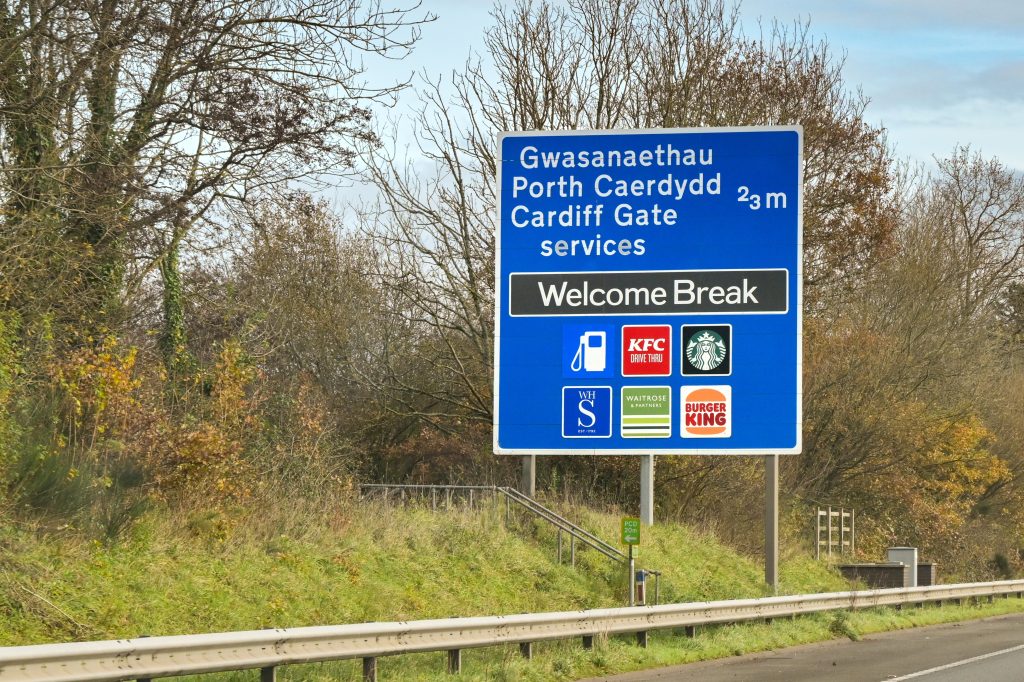
Give us a sign.
Signage as a Strategic Signal
There’s a broader cultural function here as well. Highly visible infrastructure signage does two things:
- It legitimises the transition, signalling to all road users that EVs are no longer niche.
- It serves as advertising for ownership itself, reinforcing that driving electric isn’t just possible, but easy.
Public confidence has never hinged solely on charger hardware; it’s grounded in the experience of driving. For too long, the UK’s approach has prioritised installations without proportional investment in visibility and awareness. That needs to change.
Statistics from services like Zapmap show infrastructure growth is real and rapid, but growth alone won’t overcome perception gaps. What drivers need is repeated reassurance, and nothing achieves that like clear, universal road signage that tells everyone, at every turn: “Electric charging is here. It’s everywhere. You can trust it.”
A Roadmap to Mainstream EV Confidence
Making EV charging signage as familiar as petrol pump symbols won’t by itself convince every hesitant buyer, but it will shift the dial. It transforms infrastructure from a backend statistic into a universally recognised everyday amenity, reinforcing the narrative that the electric revolution is no longer ahead of us, it’s happening now.
In the journey toward mainstream EV adoption, signs aren’t just markers on the road, they’re markers of progress. So, give us a sign, or rather, lots and lots of signs.