That’s a wrap for the UK’s 2025 EV SUMMIT
The UK’s 2025 EV SUMMIT has now come to a close, helping to explore the key narrative of Connecting Customers: Driving Sales Engagement as we see a global transition to electric vehicles, with the importance to continue encouraging adoption underscored by mandates such as the UK’s 2030 target.
This year, the EV SUMMIT underscored the importance of collaboration and partnerships of businesses right across a broad spectrum of the EV and emobility industry, ensuring that the early mainstream continues to make the EV switch, with the early adopter phase already well past us. The various addresses, keynotes, and panel discussions revealed numerous causes for celebration in the progress already made by the industry, but also highlighted the challenges that still face the industry – which, with collaboration and communication, can be overcome.
Here’s an overview of the most important points from the addresses, keynotes, and panel discussions we heard over the two days.
Day one
Opening address from the Lord Mayor of Oxford, Louise Upton
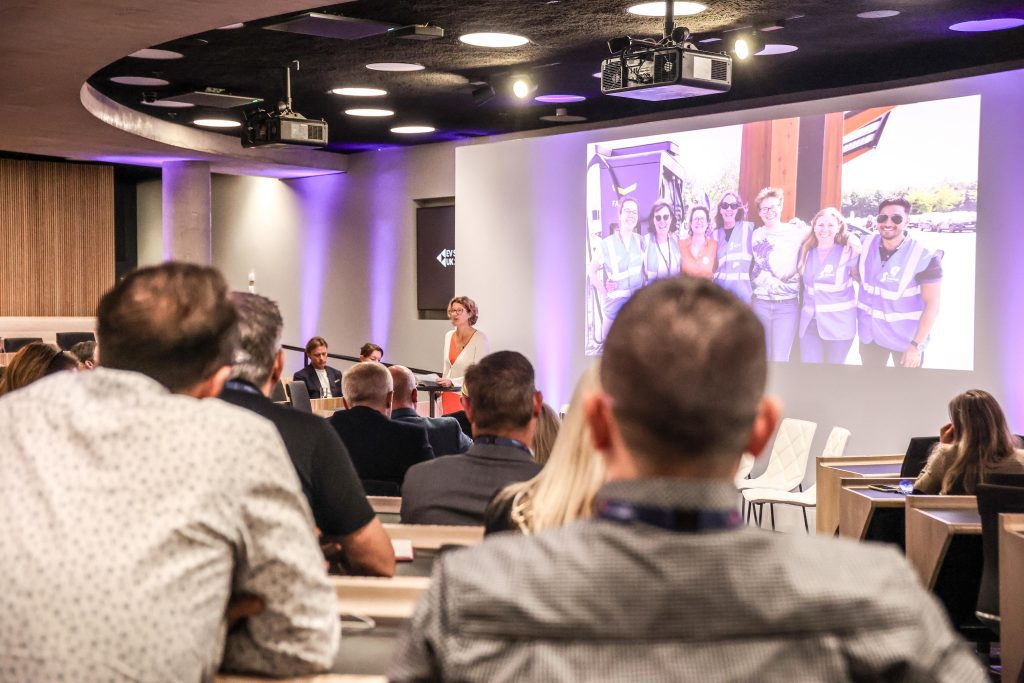
The first day of the 2025 EV SUMMIT kicked off with an Oxford City Council address from Lord Mayor of Oxford, Louise Upton. Louise reaffirmed Oxford City Council’s belief that EVs are the future.
This is thanks in part to the authority having started its own sustainability team a decade ago, along with a city-wide net zero target of 2040 and goals towards increasing air quality and improving public health – such as its zero emission zone, which has nudged fleets in the city such as Royal Mail to switch to electric.
Louise also highlighted the Energy Superhub Oxford, the UK’s most powerful EV charging hub with 42 charging bays and the energy in place to expand to up to 400 bays in the future. This collaboration between multiple EV businesses was born out of a previous EV SUMMIT, once again highlighting the importance of these events for forging partnerships within the EV sector.
Louise said: “We have a city council that believes electric vehicles are the future. And therefore, we started a sustainability team long before it was fashionable, about a decade ago. And I really don’t think that any other local authority has done more to make the transition to electric vehicles happen.”
Opening keynote from Ian Plummer, Chief Commercial Officer at Autotrader
Autotrader’s Chief Commercial Officer, Ian Plummer, led the opening keynote of the EV SUMMIT by outlining Auto Trader’s Road to 2030 mid-term report, as the country’s ZEV mandate is less than five years away – which will end the sale of new purely petrol and diesel-powered passenger cars from 2030.
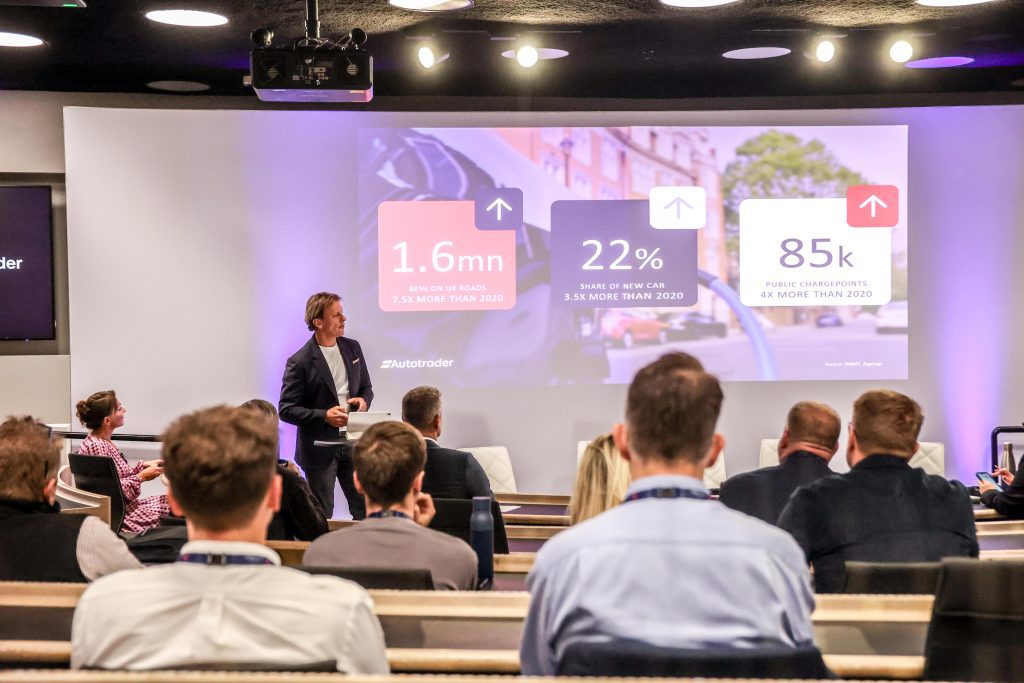
Ian outlined some of the key statistics that substantiate the impressive progress made already in the UK’s EV transition. There are now 1.6 million fully-electric vehicles on UK roads – over 7x higher than in 2020. 22% of new passenger cars sold are fully-electric – 3.5x higher than 2020. And, with around 85,000 charge points live, public charging infrastructure is around 4x higher than in 2020.
Auto Trader will be a key enabler in making used EVs a true mainstream option for adoption. Around 1 in 6 of used enquiries currently undertaken on Auto Trader are for fully-electric cars, compared to 1 in 50 in 2020.
Ian said: “There are now 150 models across 50 brands being sold in the UK to enable the EV transition, and that figure is climbing weekly. Last year, a new electric model was launched every 10 days, and that seems to be accelerating rather than slowing as we go into this year. With each of them, it feels like it’s not just incremental improvements. We’re seeing real technological leaps happen in real time.”
How can we encourage EV sales in the UK further?
Vauxhall hosted the first discussion panel of the EV SUMMIT, answering the question: How can we encourage electric vehicle sales in the UK to move to an electric future?
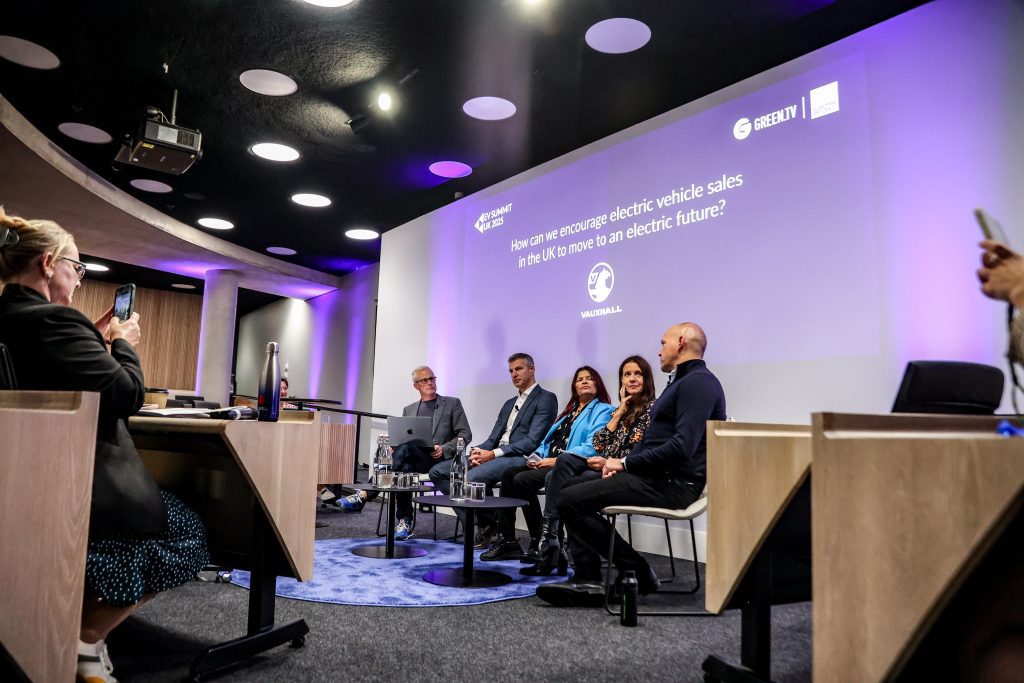
Moderating the panel was Ade Thomas, Founder of Green.TV Media, joined by Steve Catlin, Managing Director of Vauxhall, Shamala Gadgil, EV Infrastructure Programme Manager at Coventry City Council, Ginny Buckley, Founder & CEO of Electrifying.com, and Chris Pateman-Jones, CEO at Connected Kerb.
Vauxhall is one of the key promoters of electric vehicles within the UK industry, ensuring that every customer, regardless of budget, model, or where they live, can access electric mobility. It was one of the first manufacturers to offer a fully-electric version of every single model in its range, with every electric passenger car eligible for the £1,500 Electric Car Grant.
Steve highlighted the significant challenges that need to be overcome to meet ZEV targets. The ZEV mandate requires that 1 in 3 vehicles sold need to be fully-electric by end of the year. Currently, just under 1 in 5 vehicles sold are fully electric, dropping to 1 in 10 on the private retail market.
Much of the panel agreed that EV uptake over the next five years will not be linear, with variations likely to be seen across the country – favouring places which have higher levels of infrastructure, such as Coventry, which thanks to the great work of the council, has the highest level of public charging infrastructure outside of London.
Assisting businesses with decarbonisation
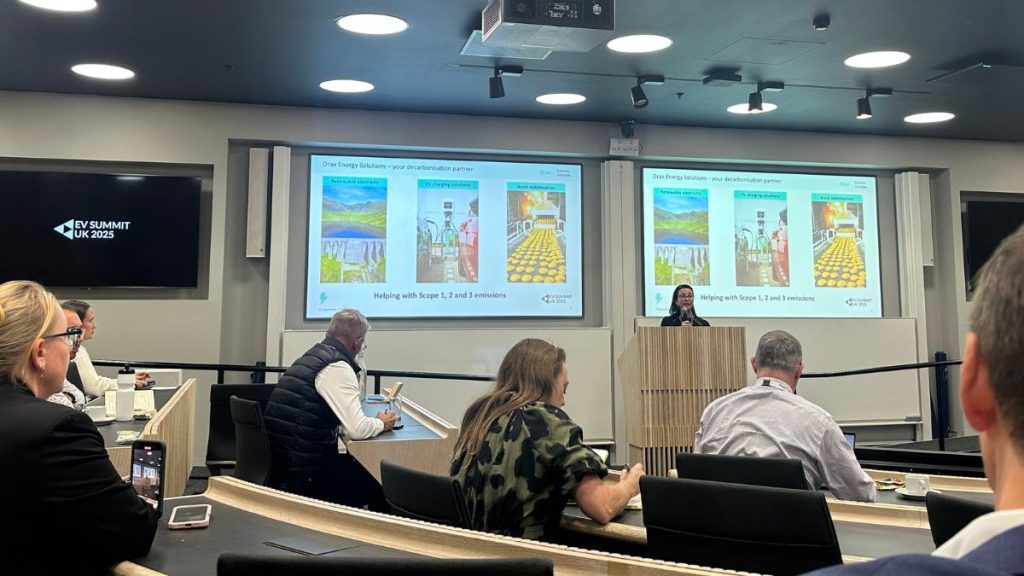
Next, we saw a side event led by Naomi Jane Nye, Head of Sales at Drax Electric Vehicles, focusing on how the firm can help businesses to decarbonise their vehicle operations. Focusing on a case study of SES Water, Naomi outlined the benefits realised by the water company from switching to an electric fleet, including:
- A 56% cost saving on vehicle running costs, as well as preventing 18 tonnes of CO2 emissions.
- A phased and gradual EV conversion, providing useful learnings.
- Home-based charging for its electric van fleet, removing further barriers and improving efficiencies.
Renault’s EV surge
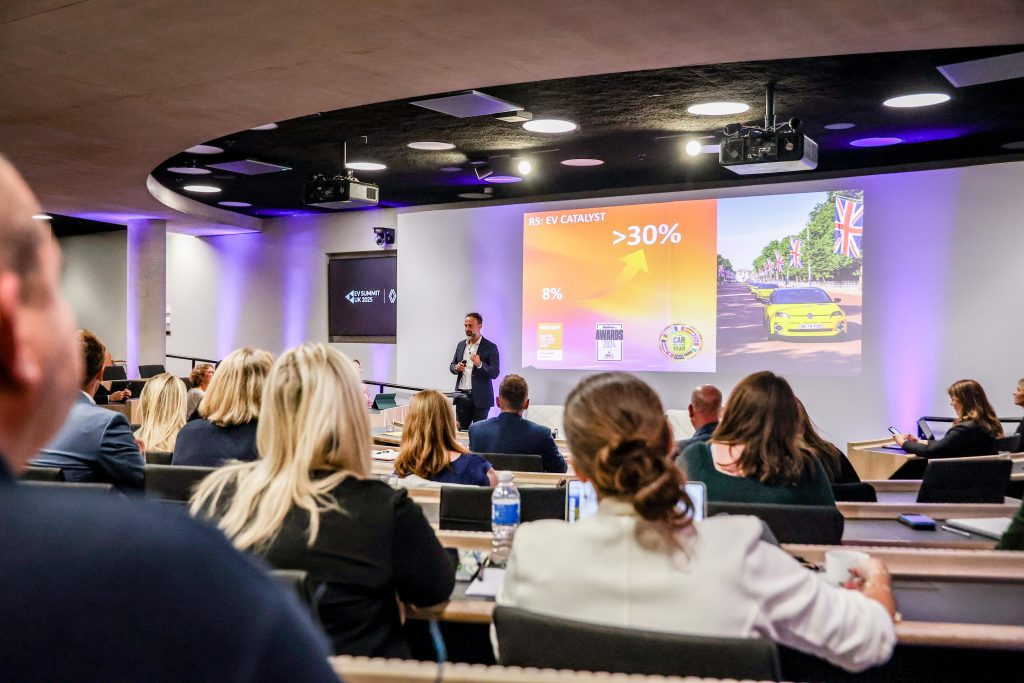
Adam Wood, Managing Director for Renault UK, took on the midday keynote, exploring how its new Renault 5 has helped spark the brand’s EV flame – enabling its electric mix growth to rise from 8% 12 months ago to 30% now.
Adam explained the EV sales method that is working for Renault: People are buying EVs such as the Renault 5 because it’s a great product that just so happens to be electric – rather than positioning the vehicle solely as an EV. Meanwhile, dialling up the ‘fun’ factor of its cars helps to dial down the ‘FUD’ (Fear, Uncertainty, Doubt) factor that often surrounds hesitant EV purchasers.
Adam also welcomed the government’s new Electric Car Grant, along with a recent £65 million investment in public charging infrastructure. Renault wants to play a bigger part in this through its Mobilize group, such as Mobilize charge pass, the rollout of 650 rapid charging stations across Europe, and the activation of bidirectional charging across France, Germany, and Holland – with the UK coming next.
Adam said: “We should all be really confident and inspired by what the Renault 5 shows us. It shows me that many people are ready to go EV, they just didn’t know it. It also shows that, if we remain customer centric and work as a team, then we’ve got all the ingredients, I think, to convince more and more of that mainstream majority that the time for EV is now.”
Partnerships between automotive, energy, and charging
OVO’s panel discussed how cross-industry partnerships between energy, charging, and automotive can help further propel the emobility and EV transition.
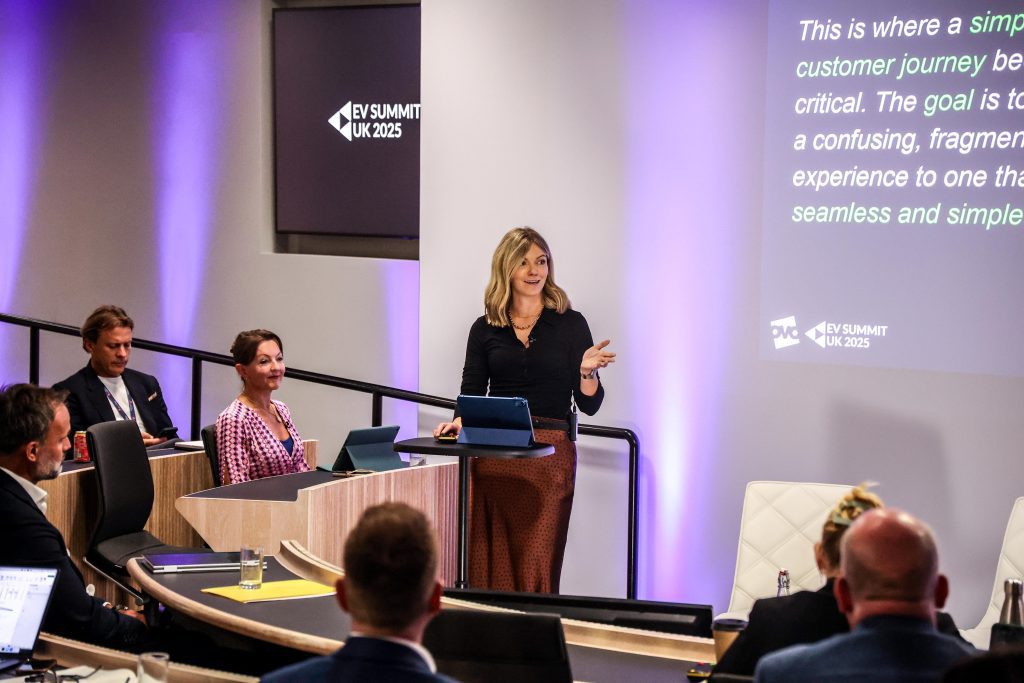
Head of Partnerships – EV Distribution Channels at OVO, Kate Jeffreys, kicked the session off by outlining where OVO is already working across other industries to improve its customer experience.
Kate said: “While we used to worry about range anxiety, now we’re worrying more about charging anxiety. And I believe that’s our role, and within all of our control, to remove that barrier for our customers.”
Kate was joined by panel moderator Gill Nowell, Director of Emobility at Green.TV Media, as well as Michael Goulden, CEO at Kerbo Charge, Francesca McGuinn, National Sales Manager at Volkswagen UK, and Louise Upton, Lord Mayor of Oxford.
Michael Goulden spoke on how partnerships with local councils, energy firms, and OEMs can assist in the rollout of cross-pavement charging. The fact remains that 40% of UK residents are without a driveway, and 50% of this group will not move to an EV without the ability to charge at home for a low price. With the help of these sectors, Michael called for increased education to the public on how cross-pavement charging can help.
Volkswagen’s Francesca McGuinn also underscored the importance of cross-industry partnerships. “Bringing cars to market is the easy bit, and the difficult bit is getting our established and loyal customers to make the transition from their fourth or fifth petrol Polo into what is our ID. Polo, going forward. We recognise that we don’t have all the power to do that ourselves, so we need to draw on people across different industries where our partnerships have been really critical.”
A global overview of charging
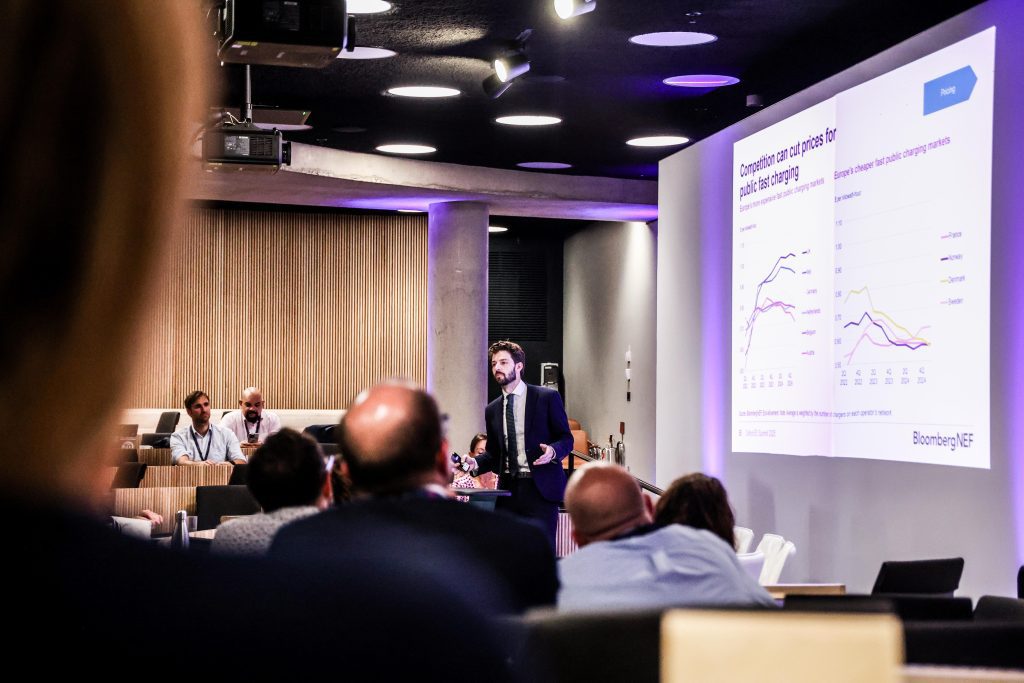
The EV SUMMIT’s first lunchtime keynote came from Ryan Fisher, Head of Charging Infrastructure at BloombergNEF, taking a global overview of how the charging industry is progressing.
Some countries and states, including Norway, Germany, California, and China will see over 50% of their total vehicle fleet become fully-electric within the 2030s, once again highlighting the increased demand that charging providers will need to meet.
But how do we reach this charging utopia? Ryan spoke on three specific factors that will help the charging industry meet this – pricing, power, and profitability.
When it comes to pricing, the data already shows that even public charging remains lower than the cost of gasoline. The same cannot be said for the U.S. and Europe, where public charging, for now, typically comes out more expensive. However, increasing CPO competition will be one way to help cut costs of public charging.
EV investment opportunities
In the afternoon, we had the Shoosmiths EV SUMMIT panel, with Chris Pritchett – Partner (Energy and Infrastructure) at Shoosmiths exploring the new investment landscape and investment opportunities for EV and eHGV infrastructure.

Chris said: “There’s so many opportunities, and so many exciting models. The trick is to pack the right one and create a proposition that you can sell to investment committees, shareholders, businesses, and we can all drive forward together.”
Chris was joined on the panel by moderator Gill Nowell of Green.TV Media, Lauren Pamma, Head of Energy & Infrastructure Financing at Aldermore Bank, Sara Sloman, Chief Strategy Officer at Paythru, and Vicky Read, CEO of ChargeUK.
The panel explored how legal and planning bottlenecks that affect standard EV infrastructure are magnified further for larger eHGV charging facilities, and explained what CPOs need to meet to receive investment – including a track record of delivering on promises, clear data on utilisation at existing charging sites, and the ability to drive brand loyalty – with EV drivers now starting to prefer certain networks or even avoid certain networks, depending on previous experiences.
The charging payment process is also set to simplify further with technology such as Plug & Charge. As Sara Sloman put it, “my phone is already my wallet – soon, my car will become my wallet for charging”.
The group also outlined what needs to be met to keep charging infrastructure investment flowing. This included certainty on legislation – crucial when huge sums of money are in question – and continued support for consumers and businesses to make the switch to EVs, directly benefitting CPOs.
Repairable and insurable EVs
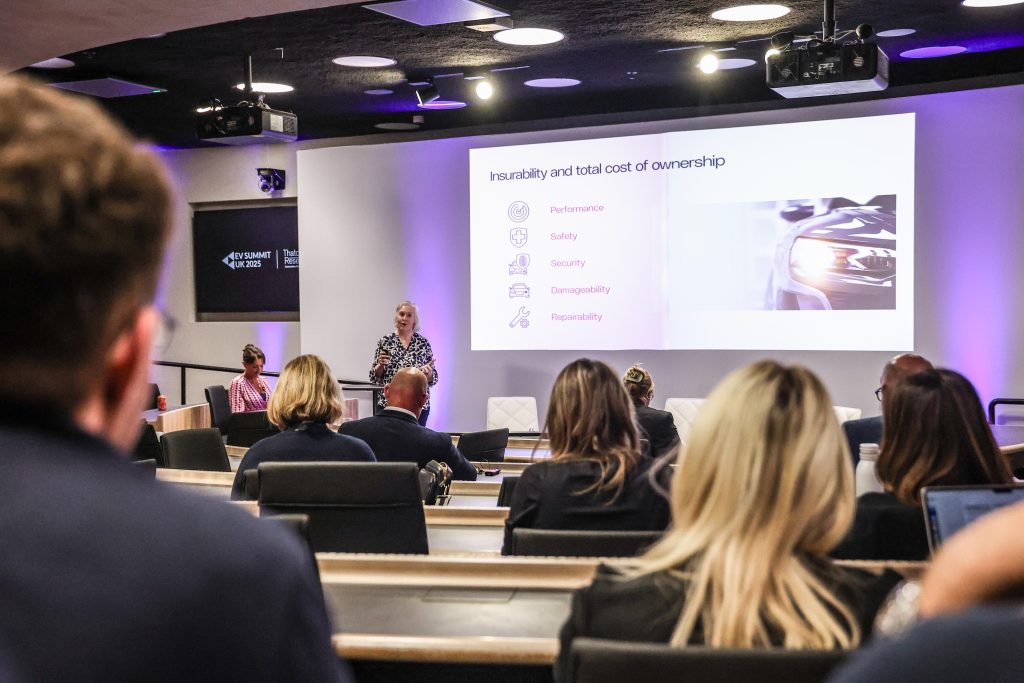
Dr Esther Taylor, Head of Research at Thatcham Research, led the afternoon keynote focusing on the key to enabling the UK’s circular economy, through creating repairable and insurable EVs.
Thatcham Research’s data helps to generate 8 million vehicle insurance quotes every week, with insurability of EVs playing a key part when it comes to the total costs of ownership for EVs. EV high voltage batteries make up a significant proportion of EV value, so if there is any damage to this in an incident, it can skew the insurance claim in favour of a write off.
Dr Esther Taylor called on several changes the industry should collaborate on to make EVs more repairable and more insurable:
- Designing EVs and EV batteries with repairability in mind
- Work together on standardising battery diagnostics
- Industry collaboration to scale battery repair and battery refurbishment networks, helping bring costs down.
How can CPOs drive higher utilisation and brand loyalty?
The final panel of the first day of the EV SUMMIT came from Petalite, a provider of next generation, high-power DC charging hardware – which has the goal of revolutionising rapid and ultra-rapid charging technology.
In 2025, reaching higher utilisation rates is the key objective of all CPOs. How can CPOs achieve this, along with high consumer loyalty, whilst fighting grid constraints?
The discussion kicked off with a keynote from Steven Gardener, CEO of Petalite, highlighting that when it comes to driving higher utilisation, consumer confidence in charging needs to increase. Recently, around 37% of private car buyers cited concerns around charging infrastructure as the main reason for not purchasing an EV.
A ‘balancing act’ needs to be made between chargepoint availability, utilisation, pricing, and driver satisfaction, to enable faster EV charger rollout – and therefore faster EV adoption.
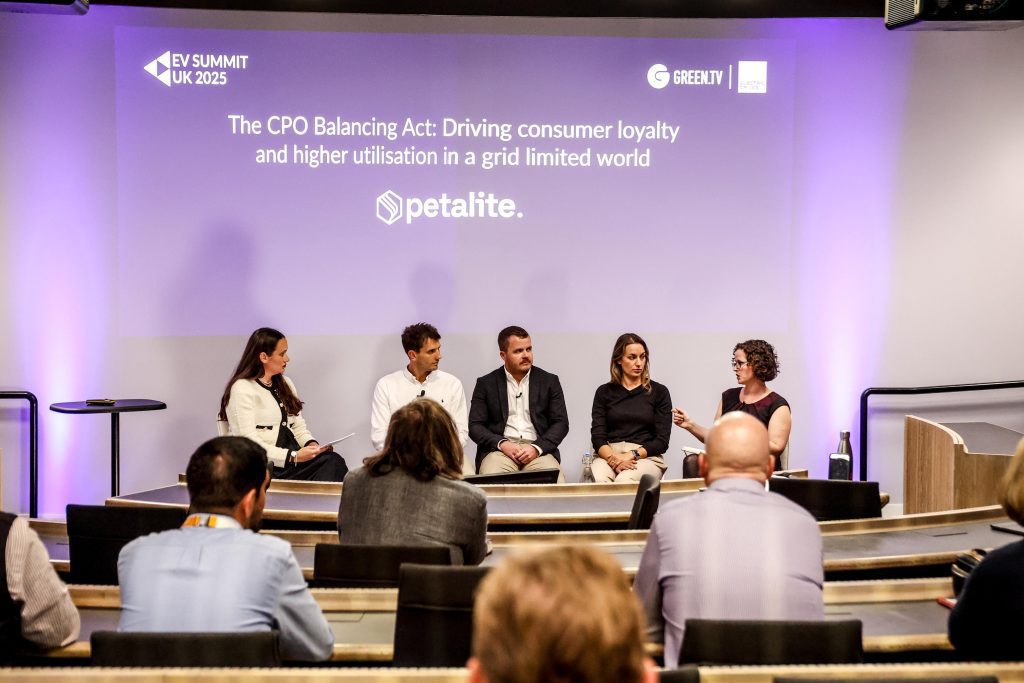
The discussion then moved to a panel moderated by Ella Power, Sustainability Partnerships at Green.TV Media, Ben Huggon, CCO of Petalite, Lewis Gardiner, EV Charging Consultant, Rebecca Trebble, Chief Product Officer at GRIDSERVE , and Jade Edwards, Head of Insights at Zapmap.
When it comes to how CPOs should respond to reliability issues, the panel discussed just how multi-faceted the reliability question is. It’s not just the charging hardware itself that needs to work – it’s software and backend elements, such as payment systems, protocols, and even the energy grid itself.
The group also touched on the fact that every CPO now legally needs to offer a support helpline – but the CPOs who successfully solve issues taken over this helpline more often are likely to drive much higher levels of brand loyalty.
Closing keynote
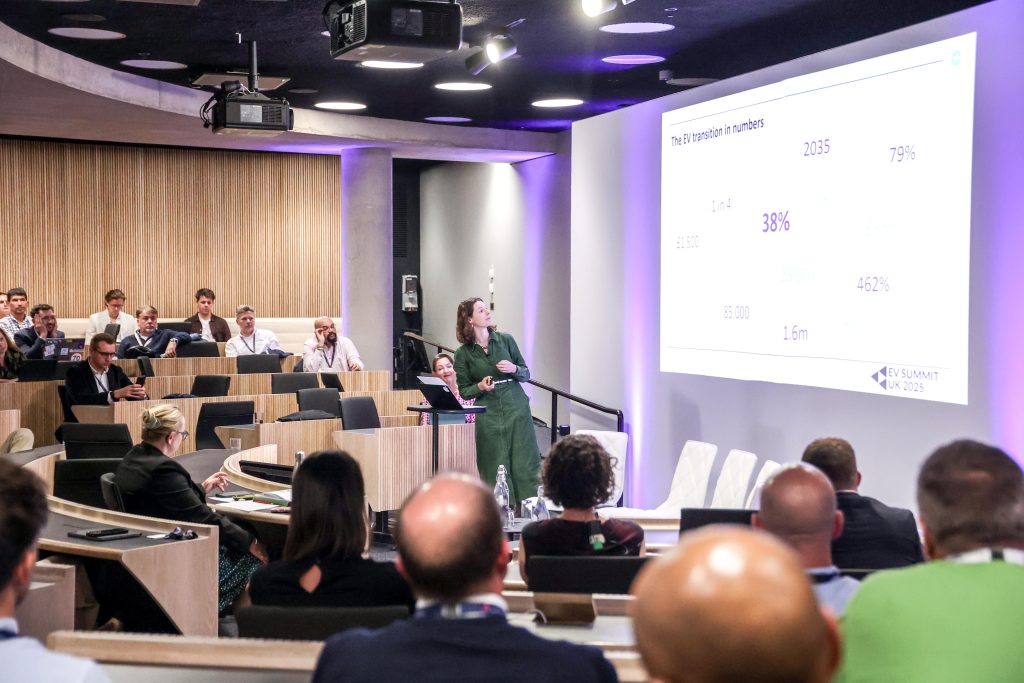
Vicky Read, CEO of charging industry voice ChargeUK, took the closing keynote of the first day of the EV SUMMIT to explore how ChargeUK and the industry is hoping to deliver widespread and affordable public charging infrastructure.
With over 85,000 public charge points already live in the UK, the country already has one of the most comprehensive public charging networks in the world, but there is still work to be done to encourage more to make the EV switch and drive higher levels of utilisation for CPOs.
Vicky said: “I do not believe that chargepoint availabity is a barrier to adoption today. It’s the number 38% – the figure that public charging prices have risen by since 2021 – that I want to talk to you about today. That is where we invite government to take further deliberate action, just as it did with the Electric Car Grant”.
This week, ChargeUK also published its white paper on delivering affordable public charging for all. Vicky outlined the three key deliverable actions recommended by this new report:
- Tackle high energy costs, bringing down standing chargers and extending policy relief
- Boost the business case, by adding charging to the Renewable Transport Fuel Obligation, generating more money for CPOs.
- Reduce VAT on public charging from 20% to 5%, in line with home charging. The current approach adds up to 9.5p per kWh in driver prices.
Day two
Opening keynote from the Department for Business and Trade
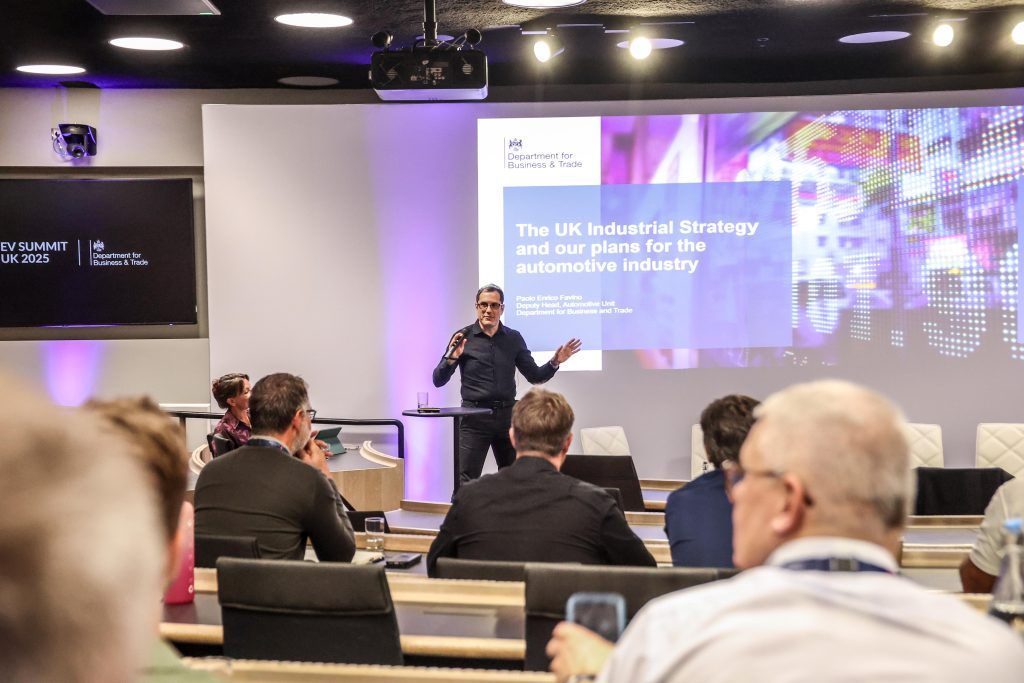
Paolo Enrico Favino, Deputy Head of the Automotive Unit for the UK’s Department for Business and Trade, kicked off the final day of the EV SUMMIT with an opening keynote giving deeper insights into the government’s Modern Industrial Strategy, and how this will support the EV industry – crucially, through both the Advanced Manufacturing Sector Plan and the £2.5bn DRIVE35 programme.
The government’s Modern Industrial Strategy, a plan taking place over the next 10 years, is set to positively impact the automotive and EV industry in several ways. A target to slash electricity costs and invest in clean power to lower energy bills will be welcomed by the whole industry, both for consumers and particularly for CPOs, who we’ve already seen calling out for cheaper energy on day one of the summit.
A key part of the strategy is the Advanced Manufacturing Sector Plan. This carries a goal for 2035 for the UK to be recognised as the best place in the world to start, grow, and invest in advanced manufacturing, such as EV-related manufacturing.
Of six frontier manufacturing industries that will be prioritised across government, batteries and automotive exist as two of these six priority sectors. UK-based EV manufacturing ‘clusters’, which bring multiple elements of the supply chain together to increase economies of scale and increase resilience are also set to be explored, initially with pilots in the North-East and West Midlands.
Paolo underlined many more aspects where this government is set to support the transition. The DRIVE35 grant funding initiative will help create automotive-related products, such as gigafactories, whilst we’re also seeing £452 million in the runup to 2030 through the Battery Innovation Programme – which will support next-generation battery research and development.
How can CPOs source new locations?
CBRE led the first panel on day two of the EV SUMMIT, focusing on the topic of how CPOs can find, build, and maintain new EV charging locations successfully, in the face of increasing competition and pressures.
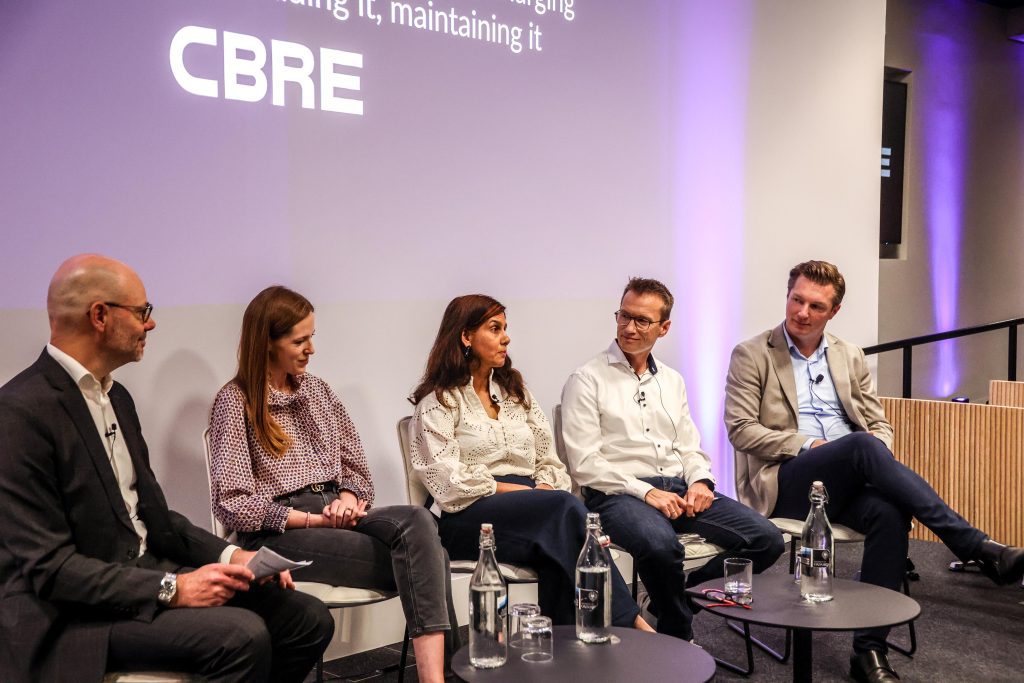
First came a keynote from Sam Sockwell, Senior Managing Director at CBRE. Mark highlighted how CBRE initially made its entry into the EV business, with the firm now helping clients to roll out end-to-end charging solutions.
The panel then switched to a discussion moderated by CBRE’s VP of EV Charging Solutions, Mark Kerstens, who was joined by Manfred Klumpenaar, CEO of 50five, Daniel Kunkel, CEO of GRIDSERVE , Emma Williams, Director of Commercial & Customer at Sainsbury’s Smart Charge, and Deepa Chandrasekaran, Managing Director at Source EV.
It’s clear that adding EV chargers to a site typically boosts land value, creating a mutual business opportunity both for CPOs and land owners. However, with each CPO on the panel having different business models, the overall relationship between CPO and real estate is not as simple as it seems.
CPOs on the panel such as GRIDSERVE and Source EV need to interact with landowners, leasing spaces across a variety of locations. 50five is also in a unique position, installing and maintaining charging infrastructure for customers – and also offering financing if its clients cannot afford to pay for the infrastructure outright.
Sainsbury’s Smart Charge is another unique business model, highlighting Sainsbury’s decision to go their own way rather than partnering with an existing CPO, as seen with other supermarkets. This end-to-end CPO owns the land they operate on, focusing on ultra-rapid charging, with plans to expand further across the Sainsbury’s estate.
Sainsbury’s chose this strategy due to the availability of stores and land where EV charging can be installed, as well as its vertical integration within the Sainsbury’s business providing in-house expertise in construction and maintenance, as well as a strong and existing customer-facing brand.
The progress of electric truck adoption
Volvo Trucks UK’s Head of Electromobility, Amy Stokes, spoke on the progress we’re seeing across the electric truck industry. Electric trucks aren’t just a concept – they’re already a reality on UK roads, already operating in real fleets from firms such as DFDS, Gregory Group, and Collins Earthworks Limited.
Volvo’s electric truck range is already helping to enable haulage firms to make the switch, with the latest trucks helping overcome barriers such as range limitations, charging access, and cost.
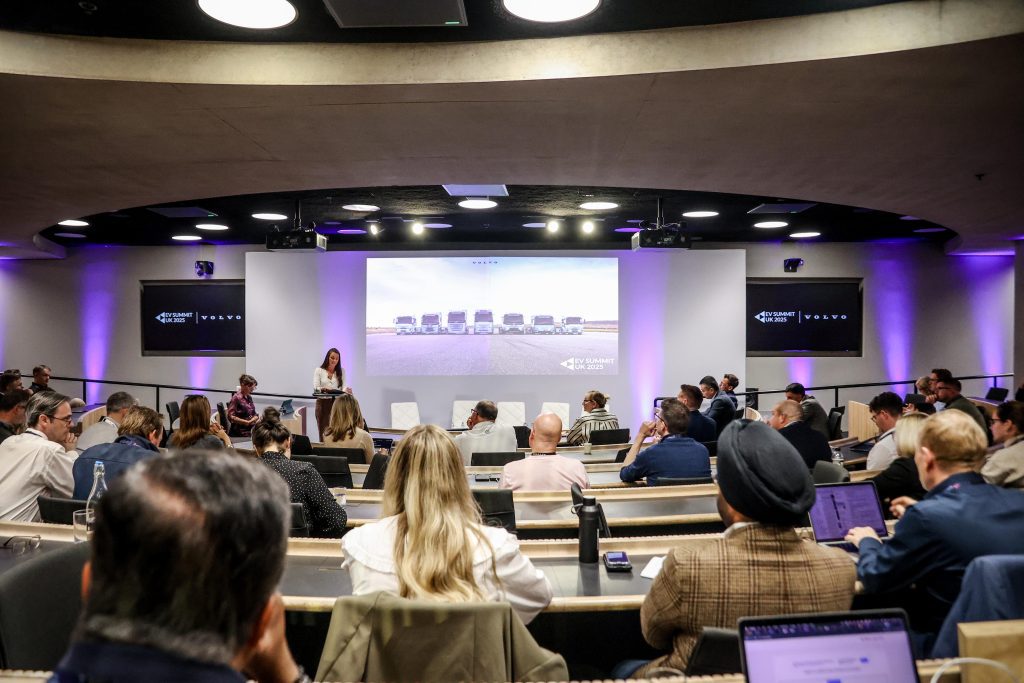
Amy said: “For decades, trucks have been the backbone of the UK economy, moving food to supermarkets, moving materials to construction sites, and moving goods to our ports and high streets.
But the impact is also clear. Emissions, air quality concerns, and noise in our communities. The good news is that the change is already underway. Volvo’s electric trucks are operating on UK roads today, proving that heavy road transport can be cleaner, quieter, and more sustainable without compromising on performance.”
However, there are still challenges to overcome to allow more businesses to make the electric truck transition. In 2024, just 0.5% of heavy trucks registered in the UK were fully-electric, highlighting the work still required to enable a widespread switch. The accelerated rollout of truck-dedicated charging infrastructure is needed to overcome this – both privately at depots, and through public charging infrastructure located along key haulage routes.
Residual values on the used EV market
Cox Automotive’s panel focused on the used EV market, and how the industry can manage residual values to ensure a sustainable EV transition for the new and used car market. Through its own connected automotive solutions over a wide geographical reach, and over 140 years of experience in the market, Cox Automotive Europe is in a strong position to assist EV manufacturers and retailers.
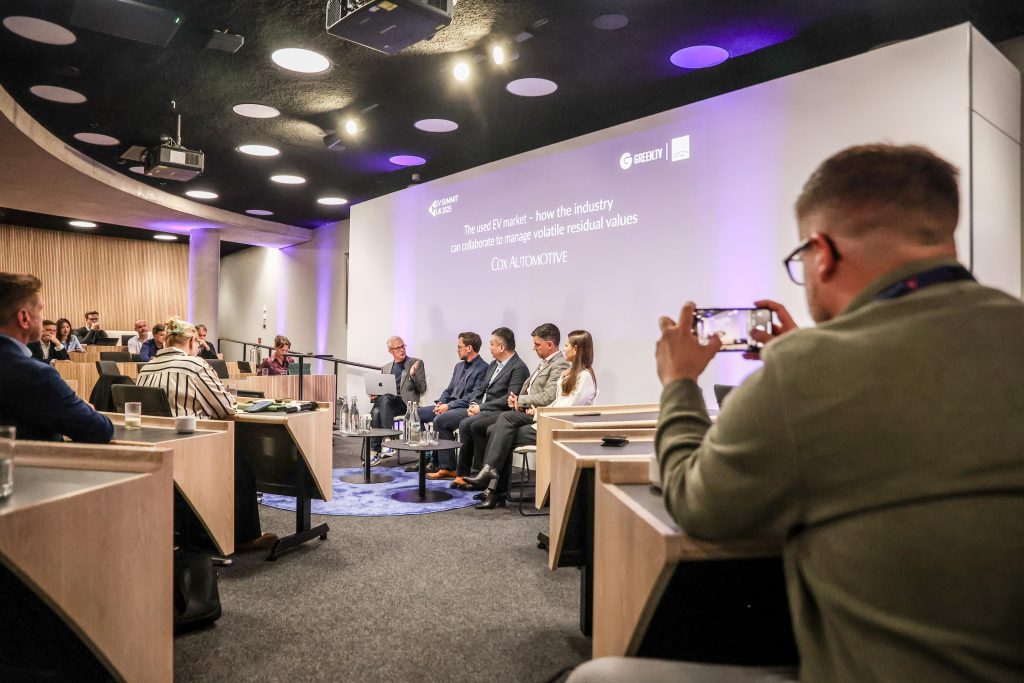
In the UK, prices of used EVs have dropped significantly since 2022 – for used EVs under 24 months old, they currently hold on average 44% of their original cost at new. Whilst these low residual values are offering a cheap route of entry for those purchasing a used EV, part of the reason for its low value is a lack of consumer demand and confidence in purchasing a used EV – and these values also make it harder to ensure a sustainable new EV market.
The panel brought together Michael Stewart, Director of New Business & Growth at Cox Automotive, Olga Spence, Strategy Manager Europe at Cox Automotive, Victor Zhang, Omoda & Jaecoo UK Country Director, and James Taylor, Managing Director at Nissan GB – with the panel moderated by EV SUMMIT founder, Ade Thomas.
The panel spoke of the need to boost those consumer confidence levels surrounding used EV purchases. This is already being worked on through increased EV-specific training of used car sales teams, as well as battery warranties that provide used buyers with reassurance.
Opportunities and barriers to EV ownership
Victoria Edmonds, CEO of EVA England, took on the lunchtime keynote on the final day of the EV SUMMIT – focusing on the latest opportunities and barriers that UK drivers perceive towards EV ownership, following the continuous research undertaken by EVA England.
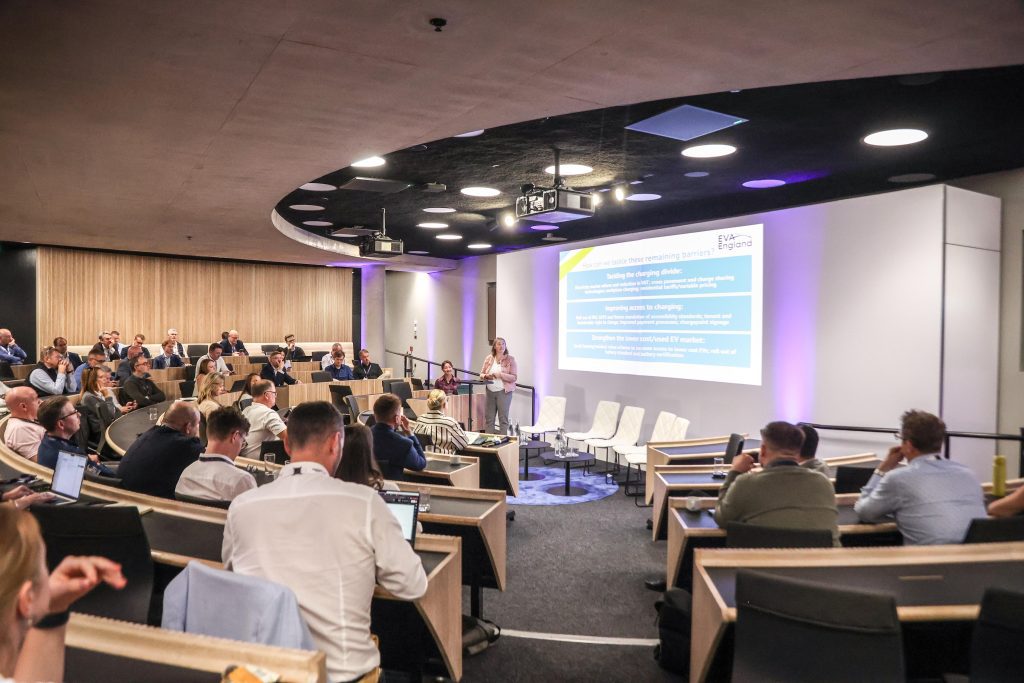
EV sales within the new car market have already made impressive progress towards the ZEV mandate – with nearly 27% of new car sales now being fully-electric. However, 95% of the entire car fleet on UK roads remains ICE-powered. This is the large group that needs to be encouraged to make the switch in the coming decade. For those that already own EVs, 68% believe that misinformation is one of the leading barriers holding back others from making the switch to EV.
Still, there remains valid concerns towards EV ownership, such as the inability to install a private charger with access to off-street parking. 75% of EVA England respondents also believed that the government should do more to address high public charging costs, a talking point we’ve seen echoed across the two days of the EV SUMMIT.
Vicky outlined three key areas to be addressed, helping to tackle the remaining barriers to adoption:
- Tackle the charging divide between public and private charging costs.
- Improve access to charging, both from an accessibility, payment, right-to-charge, and signage perspective.
- Strengthen the low-cost and used EV markets through programs such as social leasing and battery certification.
Vicky also spoke on the importance of the charging industry addressing accessibility needs to ensure no one is left behind in the switch to electric:
“Making sure that the charging industry can get behind those plans and start to roll them out is going to be really important, because otherwise you’re going to leave a couple of million drivers behind in this transition. When we talk to disability groups, they make the very good point that by making charging accessible to a user with a disability, you make it much more accessible for everyone.”
Helping mechanics adapt to the EV era
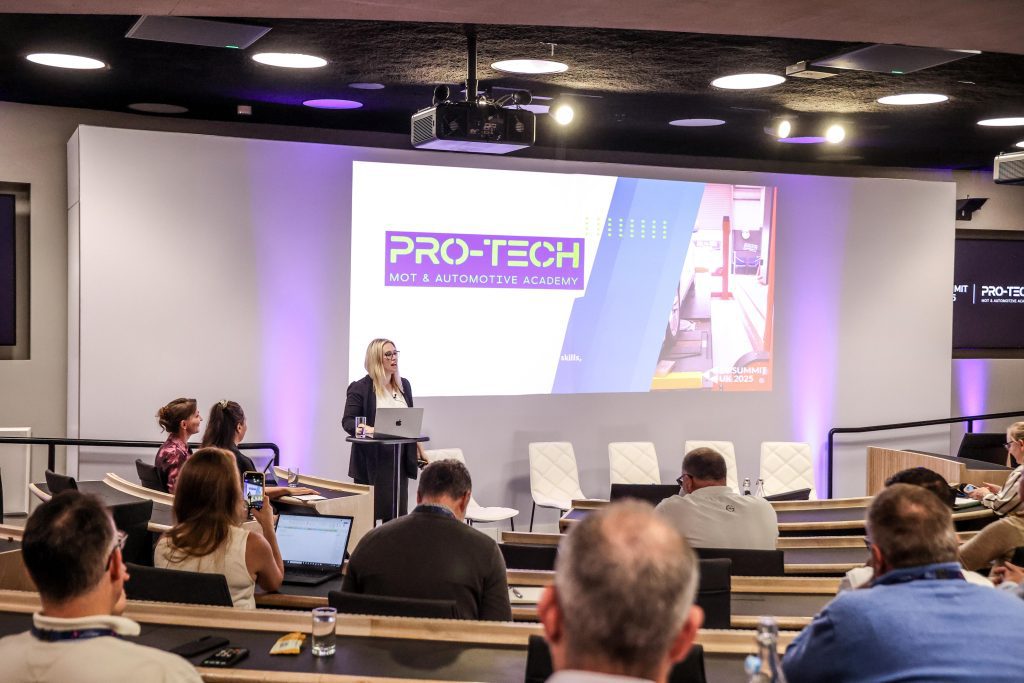
EV SUMMIT’s final afternoon keynote came from Amy-Jane Marsden, Managing Director of Pro-Tech MOT & Automotive Academy, a leading automotive and MOT training centre in the UK which is aiming to be one step ahead of the EV transition.
By 2032, around 144,000 people are set to retire from the motor industry. But, by 2030, the UK is predicted to need at least 20,000 more qualified electric vehicle technicians – a significant gap to fill. Some garages are already feeling this demand, with reports of garages turning electric vehicle work away – not because they don’t need the work, but because they don’t have the experience needed to work on them.
The number of MOT testers is also declining at the same time, with Amy-Jane calling on changes to be made for the MOT testing regime to suit EVs. Right now, EV-specific features aren’t checked on a test. The charging port connection and safety isn’t checked, and neither is the condition of the battery or high voltage cabling.
The keynote also highlighted the importance of the IMI Techsafe accreditation for technicians, as the number of EVs on UK roads continues to grow. This certification shows that a mechanic has the correct skills and safety knowledge to work on advanced technologies such as electric vehicles and ADAS systems, and is likely to become a certification that EV drivers find essential before trusting someone to work on their EV.
How do fleets manage EV charging?
The penultimate panel of the EV SUMMIT was led by Wenea, a specialised player in EV charging with 400-plus charge points across the UK, and over 1,200 across Spain and Portugal. Wenea is also one of the three CPOs operating charge points at the Energy Superhub Oxford, a 42-bay charging hub which was enabled through partnerships forged at a previous EV SUMMIT.
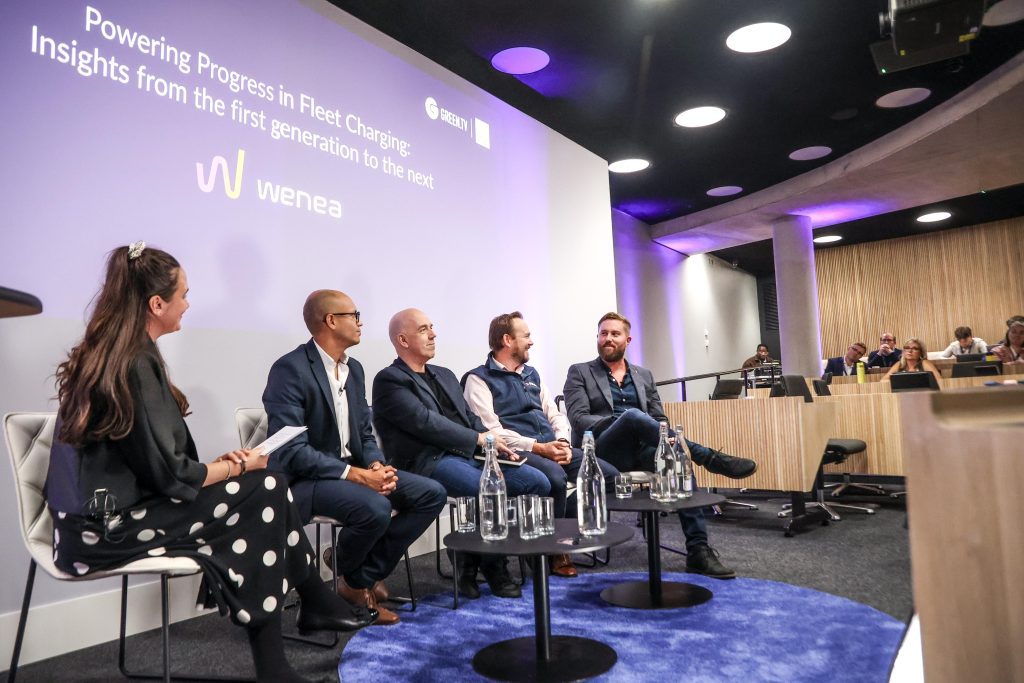
The discussion panel, moderated by Ella Power of Green.TV alongside Gustavo Prince, Director of Wenea, Jonny Berry, Head of Decarbonisation, Innovation & Strategy at Novuna Vehicle Solutions, Michael Potter, CEO of CarbonFree Finance, and Niall Riddell, CEO and Co-Founder of Paua.
This panel focused on how various fleets have navigated the complexities of rolling out EV charging, and also how charging can evolve from not just a source of energy for vehicles but into a powerful revenue asset within a businesses arsenal.
Paua’s Niall Riddell also highlighted the fact that it won’t just be fleet and home charging helping businesses to electrify their fleets: The ability to seamlessly access public charging is also required for businesses whose EVs travel longer distances or are unable to access depot charging.
Vehicle-to-grid (V2G) charging is also set to create more value for fleet charging, by generating extra revenue from charging infrastructure which has existing areas of downtime.
Unlocking the forgotten EV audience
The final panel of the EV SUMMIT came in partnership with The Charge Scheme and Top Women in EV, focusing on how we can unlock the forgotten EV audience – women, who hold 49% of driving licenses in the UK.
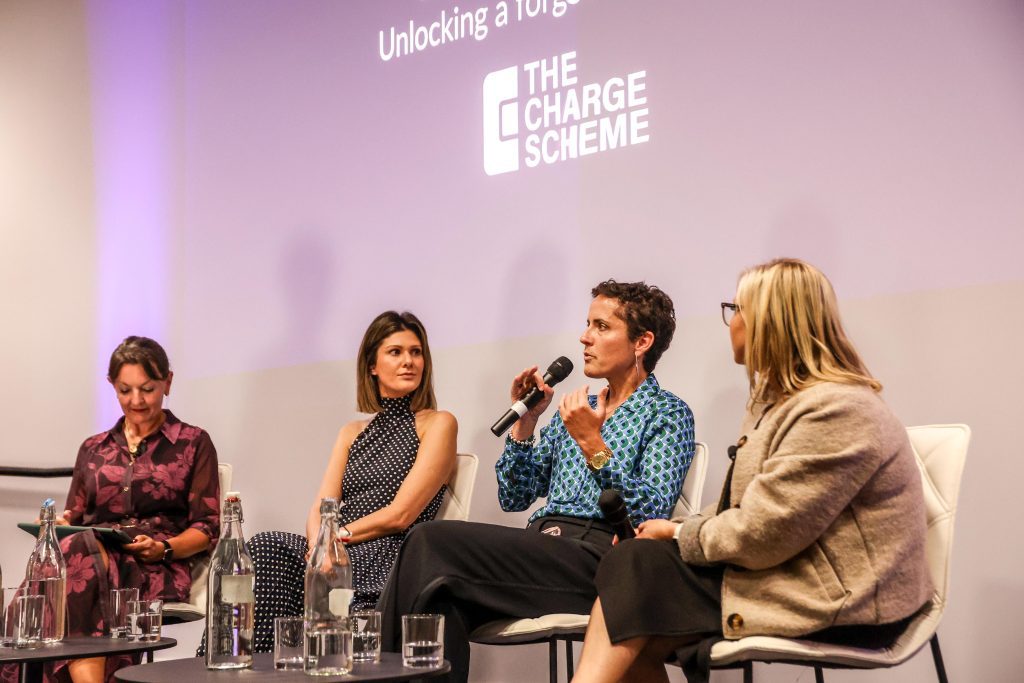
Following an introduction from the Co-Founder and CEO of The Electric Car Scheme, Thom Groot, the discussion moved onto a panel moderated by Gill Nowell, bringing together key women driving change in the EV and automotive sector: Mas Morton, Chief of Staff at The Charge Scheme, Michelle Breffitt, Co-Founder of Women Drive Electric, and Erin Baker, Editorial Director of Autotrader.
Questions were raised on how we can ensure that public charging infrastructure is designed with women’s needs in mind, particularly when it comes to the fact that this group makes up 49% of license holders. Safety is the number one point here – adequate lighting, non-secluded areas, and all-weather covers over charging bays are all key wants.
There is also the issue of affordability, which is partly being addressed through increasingly cheap EVs and the introduction of salary sacrifice schemes such as that offered by The Electric Car Scheme.
There are also changes that retailers and automakers need to make to resonate further with female buyers in the EV era. Erin Baker reflected on the fact that it took years to convince women’s magazines to run car-related content, whilst also noting that experiential marketing is key for automotive and retailers to attract a female audience – with events that reach women in the spaces where they already are.
Closing keynote
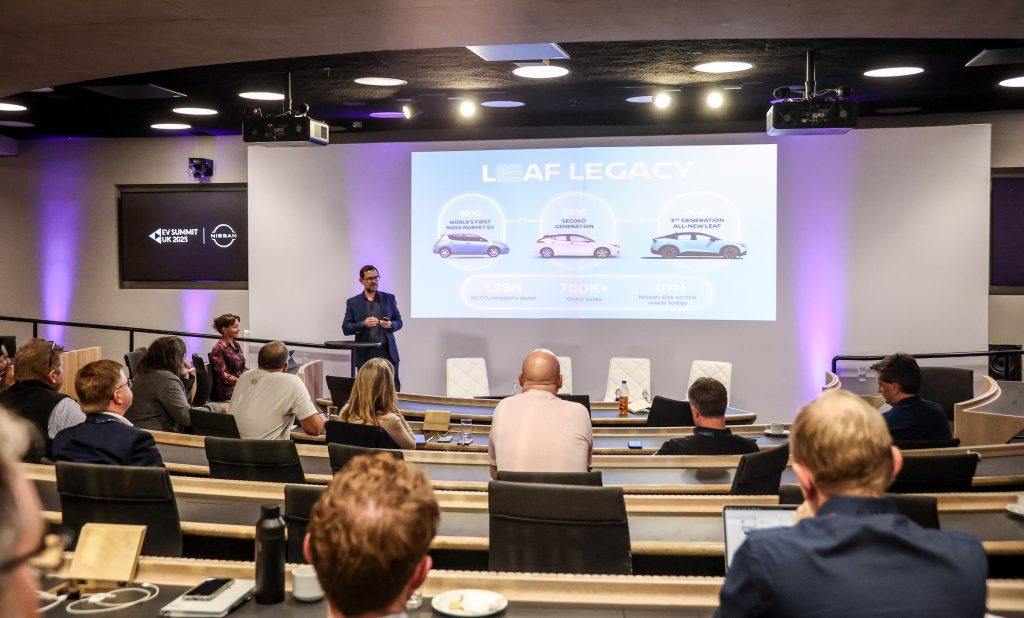
James Taylor, Managing Director of Nissan GB, took on the closing keynote of the EV SUMMIT, outlining Nissan’s road to EV adoption – from its position creating the world’s first mass market EV with the 2010 Nissan Leaf, to the imminent arrival of its third-generation Nissan Leaf in the UK.
The new Nissan Leaf will also be joined by the Micra EV this year, followed by the first all-electric Juke in 2026 – and with the new Leaf set to be produced in Sunderland, this will cement a position as the UK’s biggest manufacturer of electric vehicles. This UK-based manufacturing also means Nissan is confident that the Leaf will qualify for the top level £3,750 Electric Car Grant, increasing its affordability further.
James also pressed on the role that vehicle-to-grid will play in driving future adoption. With the new Leaf set to have both V2L and V2G capabilities, this will have the potential for some user’s home charging to become essentially free of charge.