- With UK electricity regulator Ofgem confirming that the UK will see a 7% reduction in the energy price cap from the 1st of July, charging an EV at home could be about to get even cheaper.
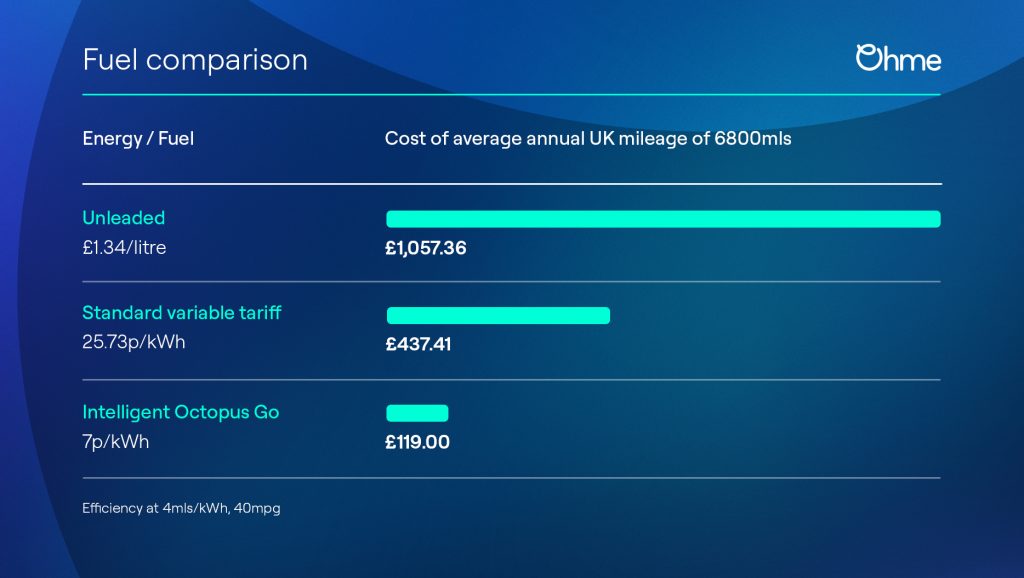
- From the 1st of July, the standard variable tariff for home electricity will drop from 27.03p per kWh to 25.73p per kWh, unlocking further savings for EV drivers.
- However, with EV-specific energy tariffs on the market, new data from Ohme shows that electric car owners can charge up at home for even better value than this rate.
Home EV charging in the UK remains extremely competitive compared to ICE ownership
Whilst charging on the standard variable tariff rate is already significantly cheaper than the costs of running a petrol or diesel car, Ohme‘s own research shows that one of its own smart chargers, combined with a dynamic energy tariff such as the Intelligent Octopus Go tariff from Octopus Energy, could unlock even further savings.
Using Volkswagen’s ID.5 as an example, specified with the 77kWh battery, a full 0-100% charge could cost as little as £5.39 with the aforementioned charger and tariff combination. That’s a car offering a claimed range of 344 miles, putting the approximate cost per mile at less than 2 pence. For your average driver in the UK (that’s 6,800 miles a year), that works out at an annual running cost of £119, if you can do all your charging at home on this cheaper rate. By comparison, your average petrol car would need over £1,000 worth of petrol to travel the same distance (at current fuel prices).
Ohme CEO David Watson commented:
“Charging at home will always be the most affordable place for EV drivers to charge their cars and this lower electricity price is great news to help them reduce their running costs. However, any EV driver charging at home should look at switching to one of the wide range of energy tariffs that drop those costs still further to help save them even more money.”
Whilst such affordable charging is likely to encourage even more drivers to go electric, there’s still a challenge for those unable to charge at home with off-street parking, who often need to resort to more expensive public charging. Solutions such as Kerbo Charge’s charging gutter and overhead charging arms are helping to overcome this barrier, though more work is still required in this area to help ensure EV ownership is easily accessible for all drivers.