We recently got behind the wheel of Peugeot’s all-new, fully electric hot hatch, the E-208 GTI. It’s the first fully electric car to wear the brand’s prestigious GTI badge, and following in the footsteps of legends such as the 1980s 205 GTI, it has big shoes to fill. With proper chassis and mechanical engineering from Peugeot Sport behind it, rather than a hastily added power bump over the standard car, the E-208 GTI is proof that the electric hot hatch segment is really heating up.
Peugeot joins the electric hot hatch game
Peugeot’s standard E-208 has been with us for a good seven years now, and following a mid-life update a few years back, there’s clearly plenty of life left in the electric supermini yet. Peugeot first confirmed a hot hatch version of the E-208 over a year ago, and now that order books are finally open, we’ve tried the production car on Scotland’s twisting, flowing country roads – exactly the sort of place where a hot hatch should shine.
First impressions
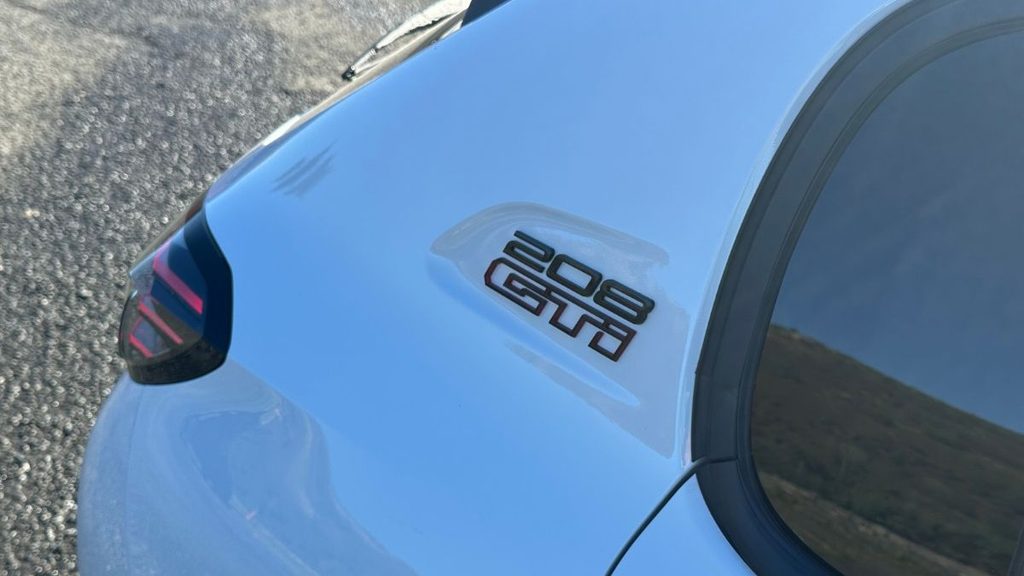
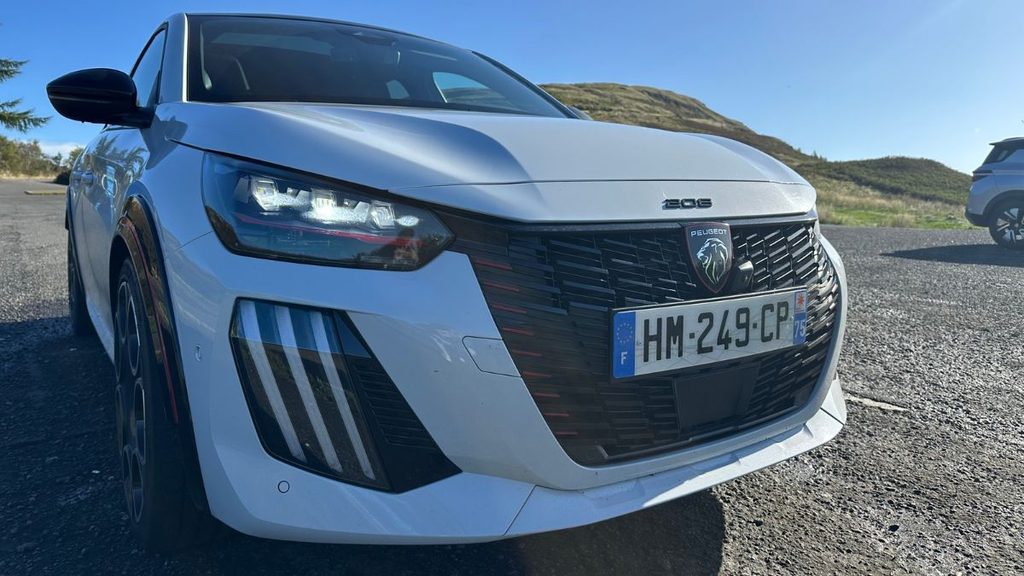
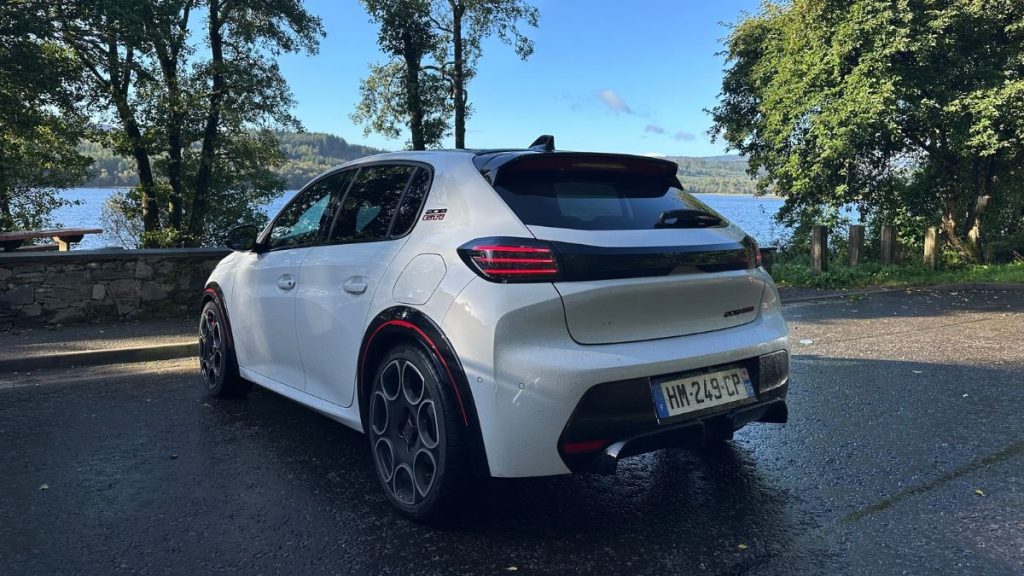
Visually, the E-208 GTI ticks all the hot hatch boxes. Outside, it gets wider wheel arches, red accents in the headlights and grille, and a beefier rear diffuser. Peugeot is keen to present the E-208 GTI as the modern electrified grandchild of the 205 GTI, and there are also nods to its design, including the iconic pepperpot wheel design and GTI badges on the rear side quarters.
Inside, it’s refreshing to see small touches that probably weren’t the cheapest option to implement, such as bright red seatbelts and red carpets, the latter another nod to the 205 GTI. The seats are a significant upgrade over the standard E-208 too, with a sporty pattern and much deeper bolstering.
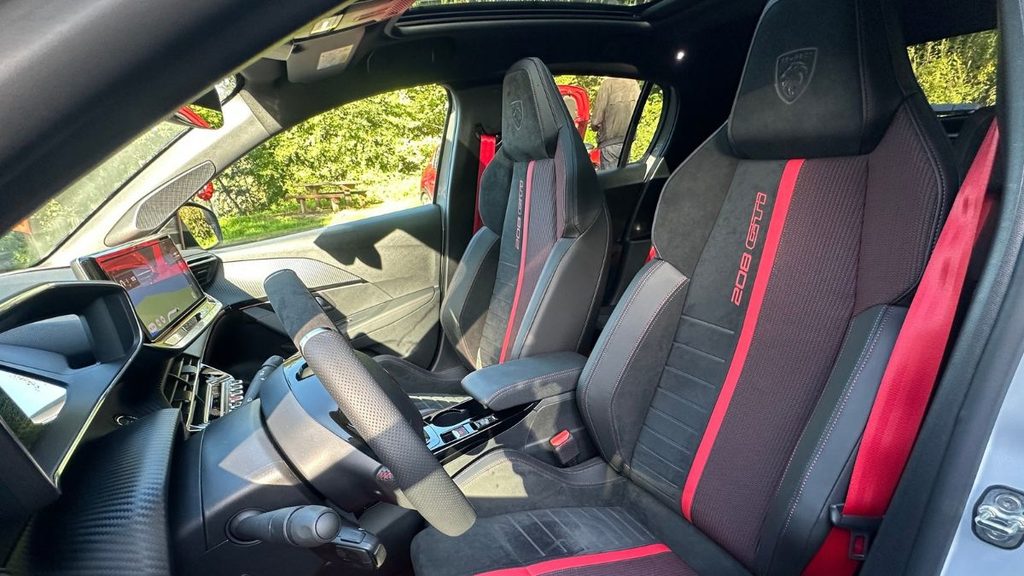
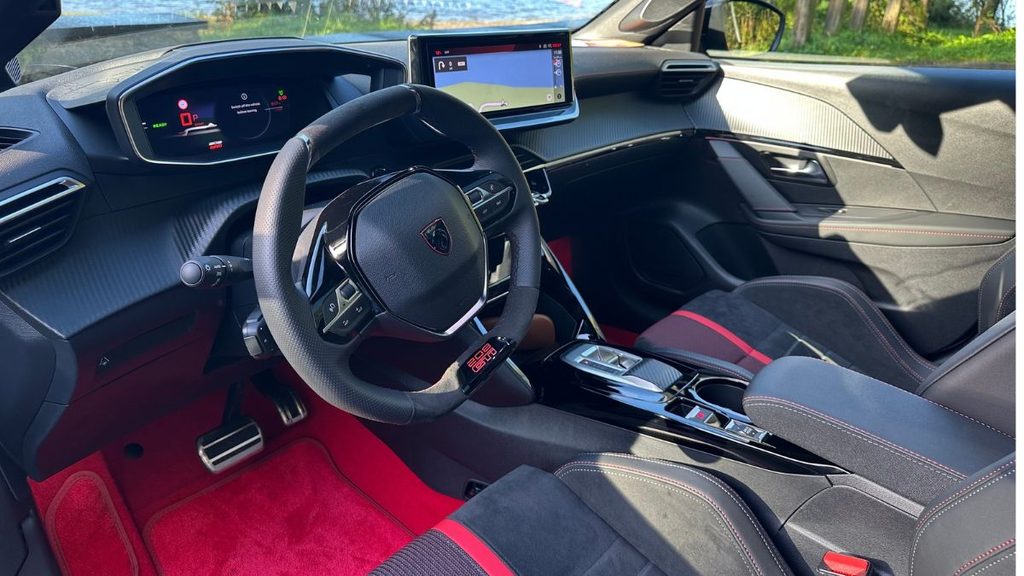
Much of the dashboard and control layout is carried over from the original 2019 E-208, but in our view, that’s no bad thing. It’s a setup that lets you focus on the drive, rather than be surrounded in a sea of touchscreens. Also increasingly rare for 2026 is easy access to key functions through a set of physical buttons, along with proper buttons on the steering wheel rather than fiddly capacitive panels.
The infotainment graphics are fresh and lag-free, the built-in TomTom navigation works well with discovery of public chargers, and there’s wireless Apple CarPlay and Android Auto. What more could you want? Well, the GTI also adds a few sport displays to the touchscreen. Showing figures such as a G-meter, current power output, battery temperature, and lap timers.
Technical changes
It’s not just the looks where the Peugeot Sport team has been allowed to work its magic on the E-208. The GTI uses an upgraded M4+ electric motor producing 281hp and 345Nm of instant torque, good for 0-62mph in 5.5 seconds. Peugeot says this makes it one of the most powerful and quickest-accelerating EVs in the B-segment, and it’s hard to argue with that. It has considerably more power than the Alpine A290 and Mini JCW Electric, and comfortably more than its upcoming key rival, the Volkswagen ID. Polo GTI, which makes do with 226hp.
Beyond the more powerful motor, there’s plenty of performance hardware. Sending that much power through the front wheels, especially, with an EV’s instant torque, can easily lead to wheelspin, so the E-208 GTI gets a proper mechanical limited-slip differential. It helps deliver impressive grip in all conditions and lets you get on the power much earlier out of corners.
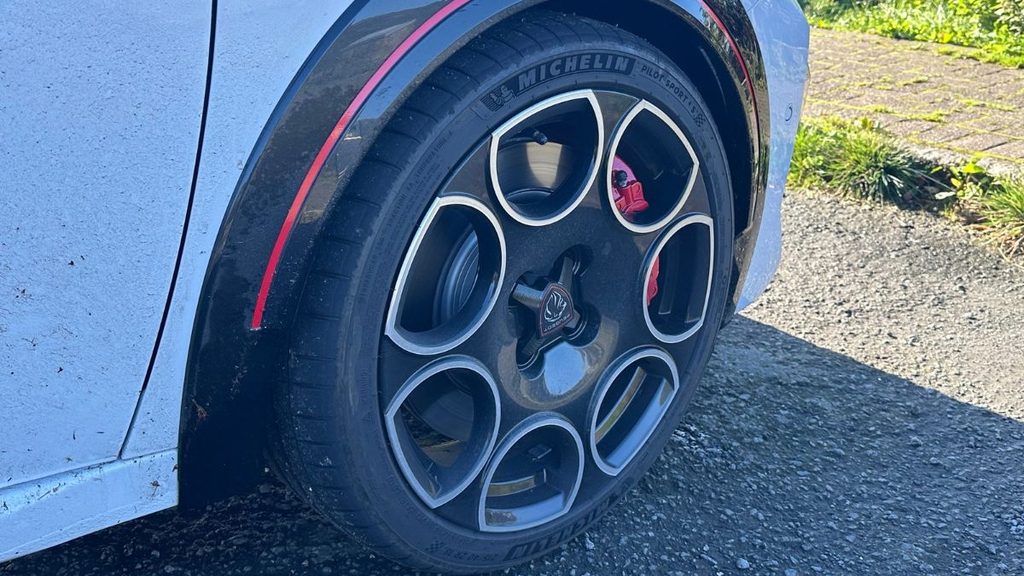
There’s also an upgraded front brake setup, with much larger discs and four-piston calipers finished in an eye-catching red. The car sits 25mm lower than the standard E-208, along with a wider track (up 56mm at the front and up 28mm at the rear).
All of this adds up to an EV that feels great on the road while remaining well judged for everyday comfort. Even on Scotland’s bumpy back roads, the suspension strikes a great balance between tight body control and comfort, and unlike some hot hatches, you won’t find your head brushing the roof over undulations.
Sport mode also fully disables regenerative braking, which is perfect for finer brake modulation and weight transfer, but less so for recovering energy during descents or slowing for traffic lights.
There’s also an artificial engine sound that grows louder the further you press the accelerator pedal, though you can switch it off in the settings if it’s not for you. It does top off the experience, but it feels like a missed opportunity for Peugeot to not lean further into the gimmick with a simulated gearshift system like the one on the Hyundai IONIQ 5 N.
Peugeot claims an official combined range of 219 miles on the factory-fitted Michelin Pilot Sport 4S tyres. These suit the E-208 GTI brilliantly, with confidence-inspiring grip in both the dry and wet. Their stickiness clearly comes at a cost to range, though, as Peugeot will let you specify Hankook Ventus S1 Evo3 tyres from the factory at no extra cost. They’re arguably a step down from the Michelins in terms of outright grip, but if that bothers you less, they lift the official combined range to 233 miles.
Efficiency at town speeds, particularly in Eco mode, is respectable, but you’ll want to keep a close eye on range if you have a heavy right foot or plan to take the GTI on track. Over a spirited 82-mile test loop in the Scottish countryside, we achieved a heavy average consumption figure of 2.5 miles per kWh, although any sporty EV will see similarly dramatic energy consumption if you use its full performance. So, with a healthy mix of spirited driving combined with slower trips (the likely use case for a hot hatch), the real world range is likely to be at or below the 200 mile mark. When you do need to top up on the road, it supports charging at up to 100kW, for a 20-80% charge in around 30 minutes.
Peugeot has kept the standard E-208’s 51kWh battery despite the extra demands of the more powerful motor, and from a driving-pleasure point of view, we’re glad it didn’t fit a bigger one. The pack weighs 340kg, bringing total kerb weight to 1,535kg, which for an EV, isn’t too bad.
Conclusion
The E-208 GTI isn’t the only sporty electric hot hatch from the Stellantis family, with a couple of siblings sharing very similar technology underneath. The Vauxhall/Opel Corsa GSE and LHD-only Lancia Ypsilon HF both use the same 281hp motor and Torsen limited-slip differential, along with similarly supportive seats. The E-208 GTI is arguably a much sportier looking thing than the Corsa GSE though, so that’s one key point of differentiation.
Priced from £34,995 in the UK, the E-208 GTI commands a significant premium. The base E-208 starts at £23,495, while the previous range-topper, the GT Premium, costs £28,245. However if you’re willing to pay that premium for the addition of lots of sporty hardware and can swallow the unremarkable battery range, you’ll get one of the most fun-to-drive EVs on the market, with bags of character.