- Hyundai Motor Group is accelerating its global rollout of V2X technologies, turning Hyundai and Kia EVs into flexible energy assets that can support grids, power homes and help manage renewable energy.
- A new V2G pilot in Korea, a commercial V2G launch in the Netherlands, and expanded V2H services in the U.S. mark the Group’s most significant step yet in positioning EVs at the centre of future energy systems.
- By enabling EVs to store energy when it’s cheap and return it during peak demand, Hyundai and Kia aim to cut customer costs, boost grid resilience and advance the shift to renewable-powered smart energy ecosystems.
Hyundai Motor Group (the conglomerate that includes, as its main automotive-brands, Hyundai, Kia, and Genesis) is no longer treating bidirectional charging as an intriguing future technology. It’s looking to help build a global energy ecosystem around it. With new Vehicle-to-Grid (V2G), Vehicle-to-Home (V2H) and wider Vehicle-to-Everything (V2X) services launching across Korea, Europe and the United States, the company is positioning its electric vehicles as more than modes of transport: it’s looking at them becoming mobile power assets that store, stabilise and share renewable electricity. The group aims to bring Hyundai and Kia V2G services to global consumers and energy markets.
This shift marks one of the most ambitious steps yet by a major automotive group to embed EVs directly into national energy systems. And it arrives at a moment when grid volatility, rising power prices, and surging renewable penetration, are placing new demands on energy flexibility. Hyundai (and sister company, Kia’s) V2G services, are not just a showcase of technological capability; they point toward a future where millions of EVs behave like decentralised batteries that complement wind, solar and the wider energy mix.
“We see V2G as a way to give customers an entirely new mobility experience, grounded in how their vehicles support their energy life,” says Hokeun Chung, Executive Vice President of the Group’s Future Strategy Division. “By deploying V2G across domestic and global markets, we can strengthen EV competitiveness while playing a pivotal role in building the eco-friendly mobility market and the future energy market.”

Jeju Leads Korea’s First Vehicle-to-Grid Pilot
The most striking example of this strategy is unfolding on Jeju Island, Korea’s renewable-energy testbed. By the end of 2025, Hyundai Motor Group will launch the country’s first public V2G pilot service using the Kia EV9 and Hyundai IONIQ 9. Jeju has long wrestled with oversupply of renewable energy during periods of high wind or sunshine, a challenge that V2G is uniquely suited to address. By allowing EVs to absorb excess generation and feed it back during high-demand periods, they operate as flexible grid-balancing assets.
The pilot is a genuinely collaborative effort. Jeju Special Self-Governing Province is providing the regulatory support needed to make V2G viable in a real-world environment, while KEPCO is ensuring that EVs can integrate safely and reliably into the distribution network. Hyundai Engineering is analysing charging-station performance and developing future service models, and the Group itself is leading the technology verification and operational oversight.
For participants, the appeal is immediate and financial. They will charge when prices through Jeju’s real-time energy market are low, and discharge when prices rise, smoothing grid peaks while reducing personal energy costs. If successful, the Group plans to scale this model nationwide with public-sector partners, establishing a blueprint for an energy-responsive EV fleet.
A Commercial V2G Breakthrough in Europe for Hyundai and Kia V2G services
While Korea tests the model, Europe is ready to commercialise it. The Netherlands, a market grappling with high energy prices and growing grid constraints, will become the first region to host Hyundai and Kia’s customer-focused V2G service. This launch builds directly on the Group’s V1G smart-charging service introduced earlier in the year, lifting customers one step further into fully bidirectional energy participation.
Dutch EV drivers will be able to subscribe to tariff plans offered in partnership with local utilities. Their vehicles, beginning with the Kia EV9 and Hyundai IONIQ 9, will automatically charge during low-cost periods and discharge electricity back to the grid when prices peak. In practice, this transforms the vehicle from a passive energy consumer into a revenue-generating, grid-supporting asset.
Beyond personal savings, the service has broader national implications. As the Netherlands accelerates its transition to a renewables-heavy power system, flexibility becomes the invisible backbone of reliability. V2G cars provide exactly that: distributed, fast-responding energy storage that helps absorb fluctuations in the supply-demand balance. Hyundai Motor Group plans to expand this service to other European markets, making V2G a core utility feature for future models.
V2H in the U.S.: Energy Security Meets Everyday Resilience
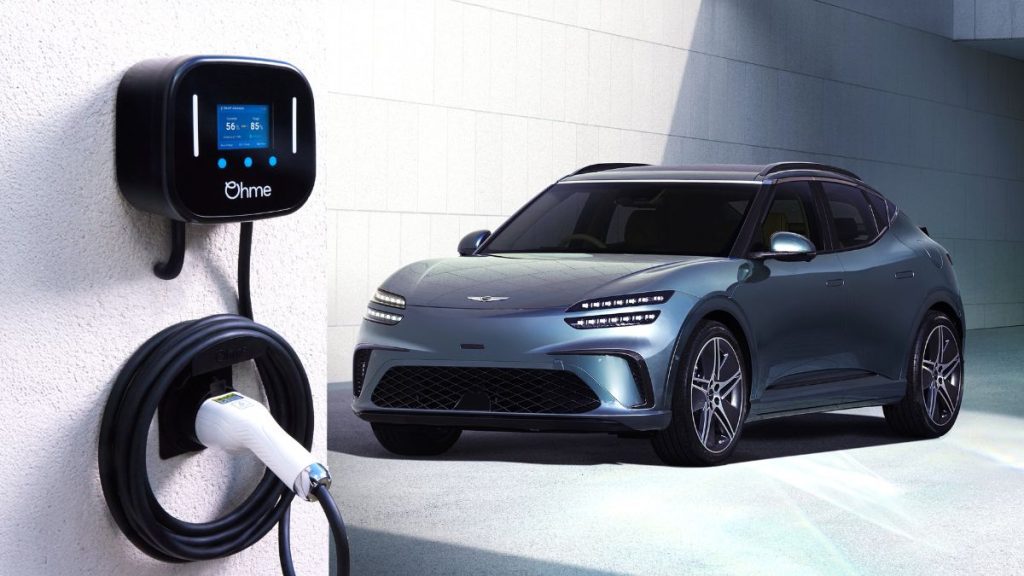
In the United States, the Group is taking a different, but equally strategic, approach. With climate-driven wildfires, storms and outages becoming more frequent, Hyundai and Kia are positioning EVs as essential resilience tools for households. Vehicle-to-Home services will allow customers to power critical home circuits during emergencies or reduce electricity bills by shifting energy use away from peak times.
The rollout is already underway. Kia launched V2H for the EV9 in early 2025, and Hyundai will introduce the capability on the IONIQ 9, with wider compatibility planned for future models including the EV6. The concept is simple but compelling: charge when costs are low, then use that stored electricity when the grid is under pressure. For many U.S. families, it will be the first time an EV becomes a direct contributor to their home’s energy independence.
A New Phase of EV Maturity for Hyundai and Kia
All three regions, Korea, Europe and the U.S., reflect a broader philosophy: EVs should no longer be isolated mobility devices. Hyundai Motor Group aims to weave our cars directly into the fabric of everyday energy management, from stabilising island grids to lowering household bills.
As V2X technologies mature, the value of owning an EV will no longer be measured solely by driving range or charging speed. It will be measured by the vehicle’s contribution to energy resilience, renewable-energy integration and, importantly for bringing the early mainstream along on the EV journey, everyday cost savings. By accelerating these services at scale, Hyundai and Kia are setting the tone for an era in which EVs act as silent partners in the global clean-energy transition.
If this wider EV strategy succeeds, with other major OEMs like Renault and Nissan also pushing for V2X, the world’s energy systems, and consumer energy bills, may one day, soon, be shaped not only by power plants and grid operators, but by millions of EVs, charging, discharging and trading electricity in balance with renewable energy rhythms.
Authored by Ade Thomas.