There was a time, not long ago, when the challenge facing Chinese EV makers in Europe was straightforward – to convince sceptical buyers that the cars were quality products. That argument has largely been won, with range figures, charging speeds, and price points speaking for themselves, while European registration statistics also reflect it.
The harder problem, the one that keeps brand strategists in Shenzhen and Guangzhou up at night, is the emotional factor. Europeans are buying into heritage and identity when they buy a car, and a badge means something to buyers. And so, over the past eighteen months, we’ve watched China’s leading OEMs execute one of the most coordinated cultural repositioning campaigns the automotive industry has ever seen, through a deliberate embrace of the institutions and icons Europeans already love.
007 reports for duty at BYD
Nothing captures the strategy more vividly than BYD’s signing of Daniel Craig. In March, China’s largest car manufacturer announced that the former James Bond would front the global campaign for Denza, its premium sub-brand, as it launches across Europe, Latin America, the Middle East and Africa.
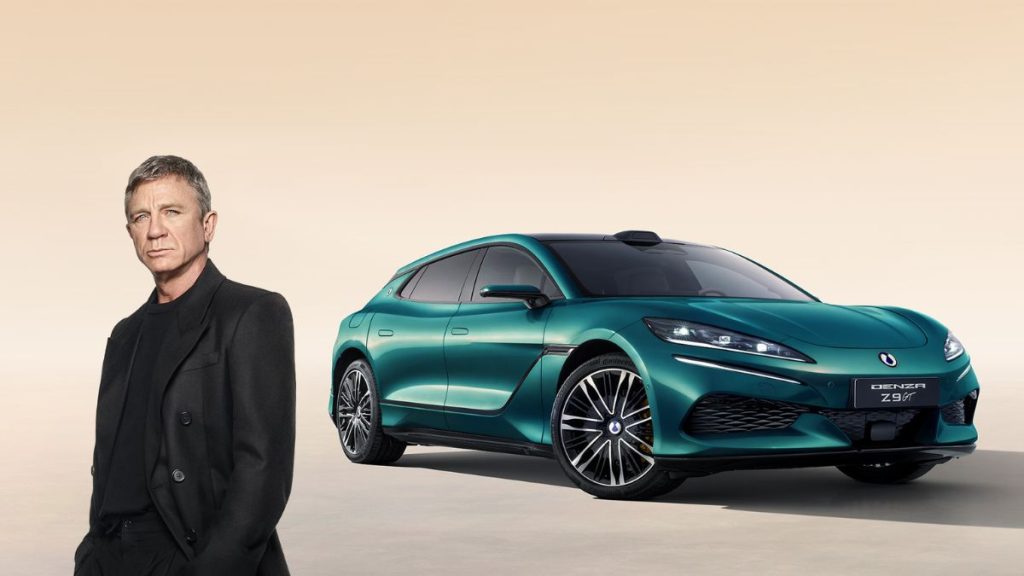
The symbolism is impossible to miss. Bond drives an Aston Martin. Craig, the man who embodied British automotive cool for five films, now lends his image to a Chinese EV brand. BYD Executive Vice President Stella Li framed the choice around “strength, sophistication and authenticity”, but the subtext is bolder – automotive luxury is no longer the exclusive property of old Europe. Denza chose the Palais Garnier opera house in Paris, one of Europe’s grandest cultural landmarks, to reveal its flagship Z9GT in April.
The beautiful game, electrified
BYD has also moved through European football with remarkable speed. In under twelve months, the company has assembled a portfolio spanning three of the continent’s biggest clubs: a three-year automotive partnership with Inter Milan, a deal that put the BYD name on the training-kit sleeves of Manchester City’s men’s and women’s teams (complete with charging infrastructure and energy storage at the club), and multi-year global partnership with Champions League winners Paris Saint-Germain, running until 2029.
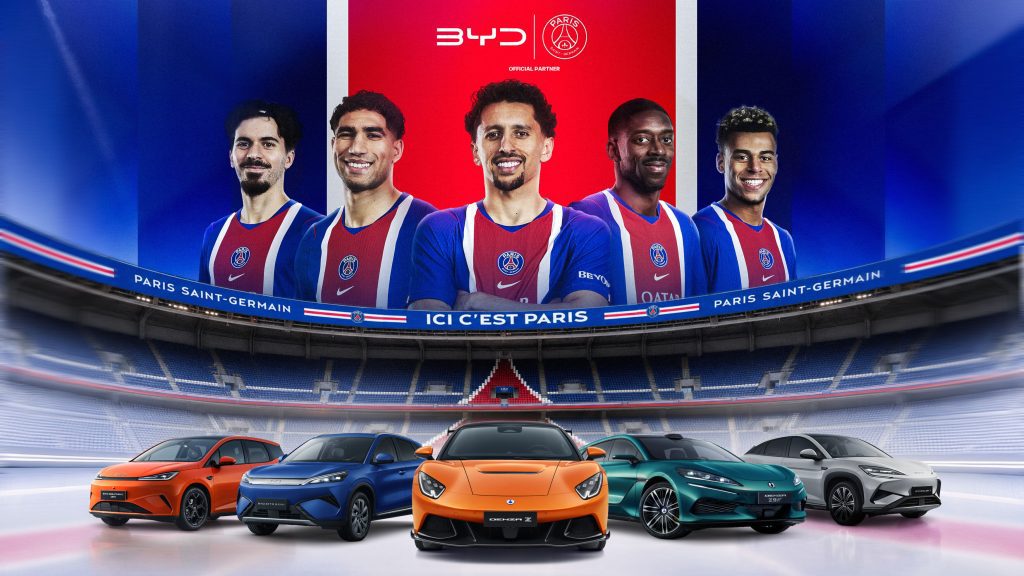
The PSG deal gives BYD signage at the Parc des Princes, exclusive content with both the men’s and women’s sides, and a fleet of BYD and Denza vehicles supporting the club’s daily operations. When your brand is associated with one of the most-watched sporting teams in Europe, you stop being a foreign entrant and start becoming part of the furniture.
Goodwood Festival of Speed
Perhaps no event is more steeped in European motoring heritage than the Goodwood Festival of Speed, and this year, Chinese manufacturers took up a large footprint. BYD took the festival’s largest stand, a 2,016-square-metre showcase spanning its BYD, Denza and Yangwang brands, debuting eight models including the Denza Z sports car, presented by Stella Li alongside 2009 F1 World Champion Jenson Button, and demonstrating 1,500kW flash charging capable of a 10 to 70% top-up in five minutes.
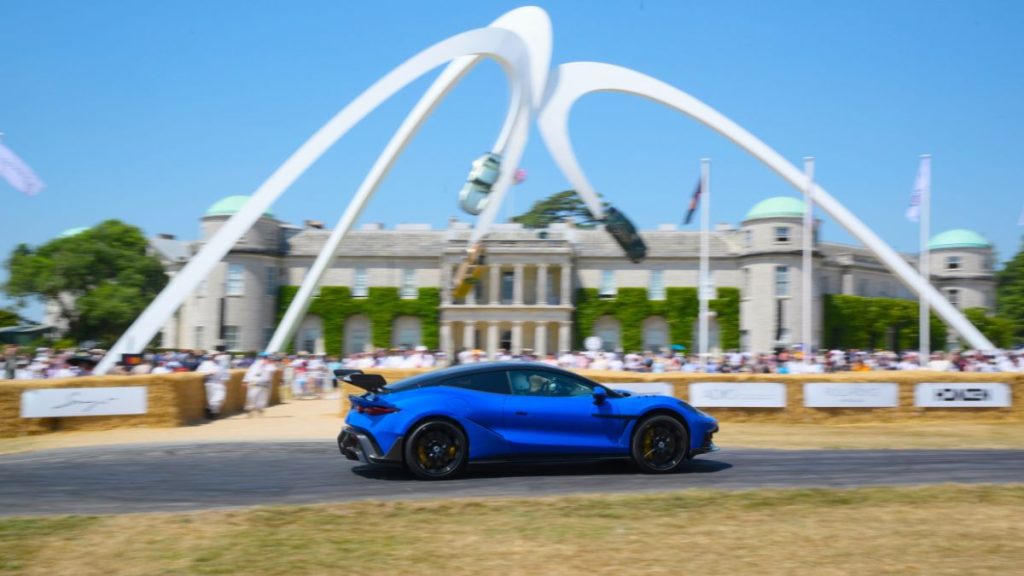
They weren’t alone, with MG teasing its forthcoming MG2 supermini via the GO! Concept, while the Yangwang U9 Xtreme, a production car with a claimed top speed of over 308mph, took on the famous hillclimb itself. Chinese brands no longer arrive at Goodwood as curious newcomers, but as major players, applauded up the hill alongside pre-war racers and European models.
Goodwood matters because it is where Britain’s motoring establishment gathers to decide what it loves. Being celebrated there is a form of cultural welcome that no advertising campaign could ever manufacture.
XPENG plants a flag in Munich
On 16 July, the company staged its first-ever simultaneous global launch outside China, unveiling the L03 in Munich, the home city of BMW and the spiritual centre of the German auto industry. XPENG CEO He Xiaopeng was explicit about the choice: Germany is where the automobile was born.
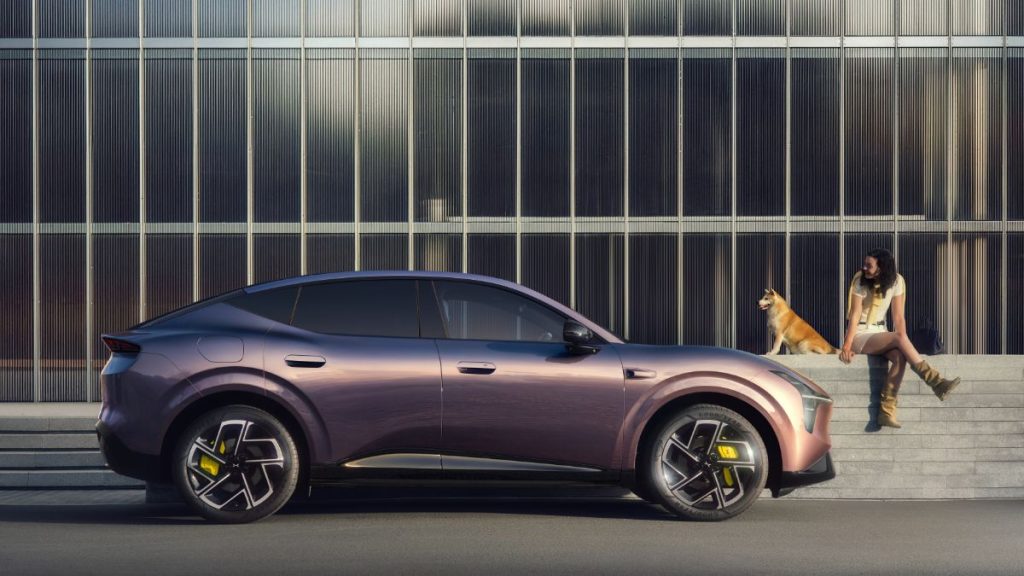
The L03 will start at around €35,000 in Europe, and is due to be built at Magna Steyr’s plant in Austria, supported by a Munich R&D centre and over 150 European dealers. By choosing Munich, XPENG signalled that it sees Europe not as a secondary market but as home turf.
Geely and Team England
And then there is Geely, whose UK arm has been announced as Team England’s Official Automotive Partner for the Glasgow 2026 Commonwealth Games. This partnership saw a fleet of Team England-branded electric Geely EX5s carry the King’s Baton, athletes, and guests across the country during the relay in May.
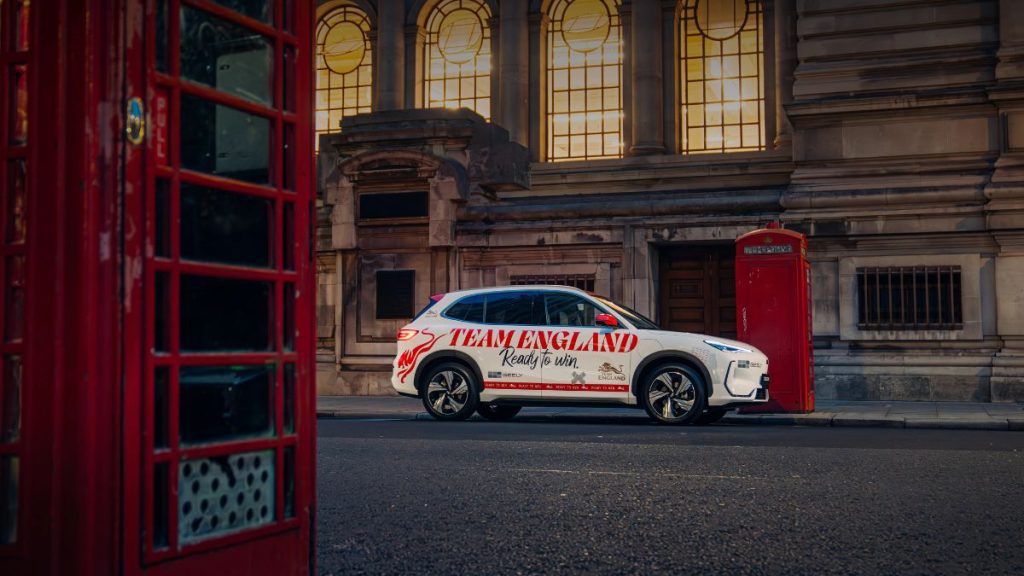
More recently, Geely showcased its vehicle line-up at the Team England Kitting Out, celebrating a partnership that is quite literally helping power the journey of England’s athletes to Glasgow. It is hard to imagine a more emotionally resonant piece of positioning for a Chinese brand in Britain: the King’s Baton, national athletes, community sport, carried on English roads in an electric SUV.
The bigger picture
Individually, each of these moves is a smart sponsorship. Together, they represent something more significant: a coherent playbook for cultural naturalisation. Chinese OEMs are systematically attaching themselves to the things Europeans feel: their film icons, their football clubs, their motoring festivals, and their national teams. In doing so, they are converting ‘Chinese EV brand’ from a category into a set of individual brands with local emotional meaning.
With domestic Chinese sales under pressure from a fierce price war, overseas markets have become the growth engine, and brand equity is the bottleneck. Product parity has been achieved, price advantage is established, and now emotional connection is the final frontier.
European legacy manufacturers spent a century building emotional brands. What we are witnessing is the fastest attempt in automotive history to bridge them. On the evidence of Bond, the Parc des Princes, the Goodwood hill, a Munich stage and the King’s Baton Relay, it’s working.