- It’s the year 2035, and electric vehicles in every category, from passenger cars to long-haul heavy trucks, have become normalised as the vehicles of choice across roadscapes worldwide.
- More importantly, EVs are now integrated into the very fabric of modern energy systems.
- What began as a shift in automotive propulsion has become a transformation of the energy system itself: cars, vans, buses and trucks, acting as mobile storage devices, stabilising homes, cities and entire national grids.
Looking at EV history from a 2035 perspective
This fusion of mobility and energy crystallised during what we can now call The Integration Decade (2025 to 2035), a period when EVs evolved from simple transportation objects into crucial devices in smart, decentralised energy networks.
At the same time, the real-world effects of climate change – increasingly flooded cities, palpably warmer winters, wildfires in new geographies, hurricanes and intensified storms – became unavoidable for every society. Mobility choices, energy choices and environmental choices collapsed into one another. The public came to understand that cleaner vehicles were not simply a sustainable lifestyle preference, but a route toward long-term resilience. Let’s look at the history of the journey of the electric vehicle – and the energy ecosystem it came to power.
Early Foundations (1800s to 1970s)
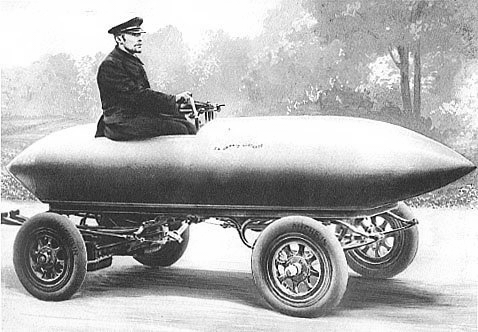
Electric vehicles were among the earliest automobiles. By the late 19th century, innovators in Europe and the United States had already produced practical electric carriages. In 1899, in Europe, Camille Jenatzy’s La Jamais Contente became the first vehicle to exceed 100 kmh, powered entirely by electricity. In the U.S., electric taxis roamed New York’s streets. And although rudimentary, electric industrial trucks and trolleys served warehouses and factories, hinting at the future diversification of EV technology.
But with the invention of the electric starter and Ford’s mass production of combustion vehicles, internal combustion engines quickly became dominant. By the 1920s, electric passenger cars had largely disappeared, surviving mainly in niche industrial roles. Even the oil crises of the 1970s, which briefly revived interest in clean propulsion, could not overcome the technological hurdles of limited battery density and high cost.
The Dormant Decades and the Birth of Hybrids (1980s to early 2000s)
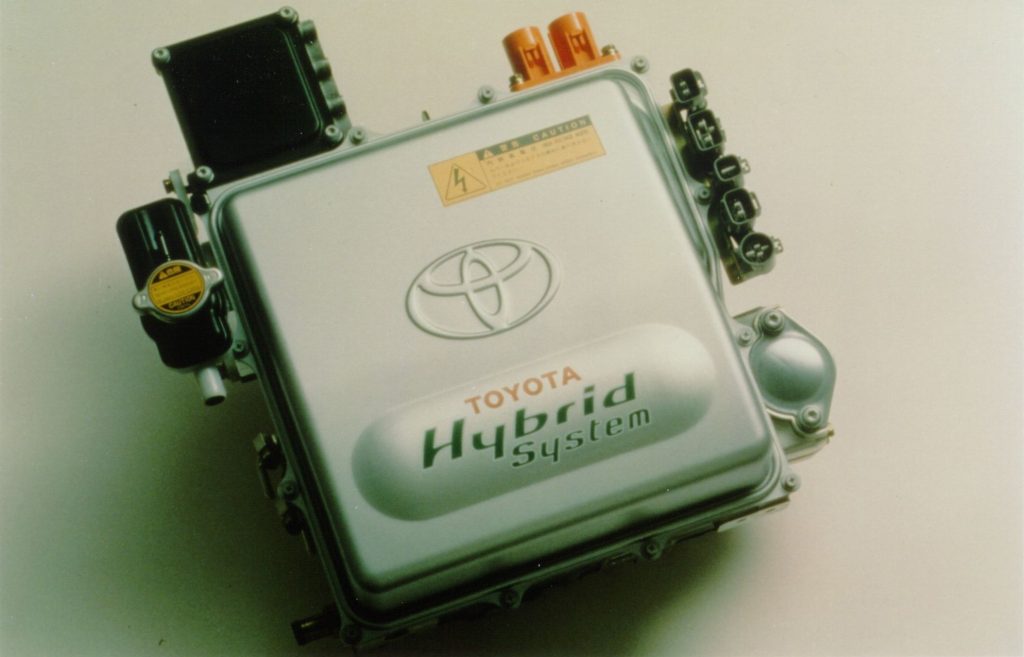
The 1980s and 1990s marked a period of slow, largely academic progress. California’s Zero Emissions Vehicles mandate of 1990 spurred early prototypes in the U.S., while Europe pursued efficient diesel engines. Japan, meanwhile, quietly prepared a revolution – the hybrid. The Toyota Prius (originally introduced in 1997) introduced the world to mass-market electrified mobility, proving that electric motors could complement combustion engines with reliability and efficiency.
Electric propulsion, however, remained limited to small cars, buses and industrial vehicles. Attempts to electrify freight appeared sporadically but were constrained by battery technology. Yet these early experiments foreshadowed the seismic shift that would occur decades later in freight transport.
The Lithium-Ion Revolution (2000s to 2015)
The next technological revolution emerged from research labs. John B. Goodenough’s pioneering work on lithium cobalt oxide cathodes at Oxford laid the foundation for modern lithium-ion batteries. When combined with advances from M. Stanley Whittingham and Akira Yoshino, the result was a battery chemistry with the energy density needed to electrify road transport at scale.
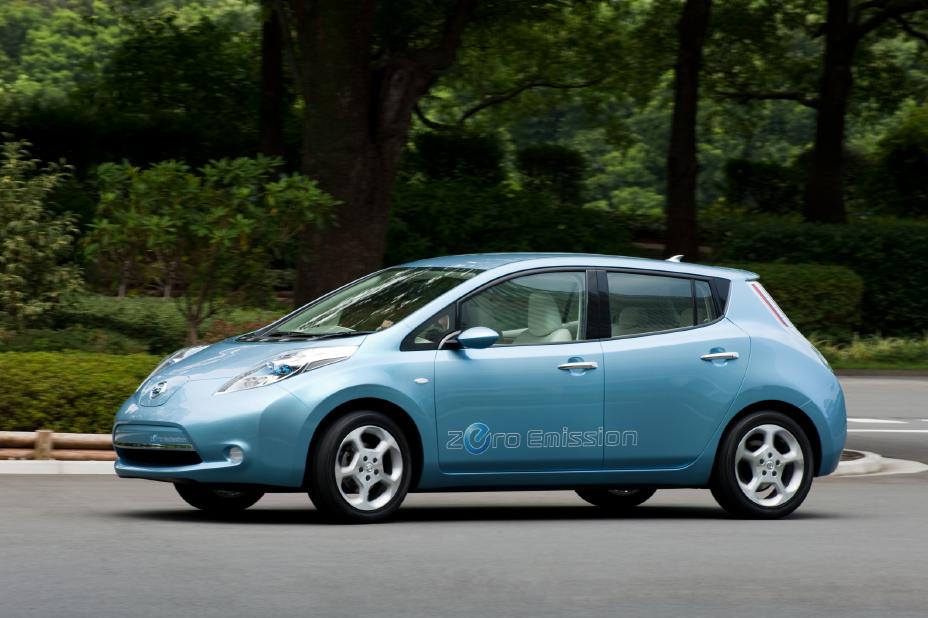
Tesla’s 2008 Roadster and 2012 Model S demonstrated that EVs could be desirable, fast and technologically advanced. Nissan’s Leaf in 2010 proved electric cars could be mainstream and global. Europe entered the field with the Renault Zoe, BMW i3 and early Volkswagen efforts such as the e-Up! and e-Golf.
China, however, recognised the strategic potential earlier and more forcefully. Its 2009 New Energy Vehicle (NEV) programme set the country on a path to dominate battery supply chains, EV production and global automotive markets for decades. By 2015, lithium-ion battery prices had fallen dramatically. The door opened for something larger: the electrification not just of cars, but of buses, vans and eventually trucks.
The Decade of Acceleration for Electric Vehicles (2015 to 2025)
Looking back from 2035, this period now appears as the tipping point when EVs entered the mainstream. Europe tightened fleet CO₂ limits and legislated the end of ICE sales. Norway surpassed 80% EV uptake. The UK, even post-Brexit, maintained ambitious 2030/2035 deadlines and invested heavily in infrastructure.
China became the world’s largest EV market by 2020, producing globally dominant brands like BYD, NIO, Geely, Jaecoo, Changan, OMODA and Xpeng. The country expanded charging networks and exported EVs worldwide.
Japan, initially hesitant, shifted decisively by the late 2020s. Nissan’s progression from the first-generation Leaf (24 kWh, ~100-mile range) to the third-generation models (75 kWh, 380-mile range, fast thermal management) illustrated how quickly the technology matured.
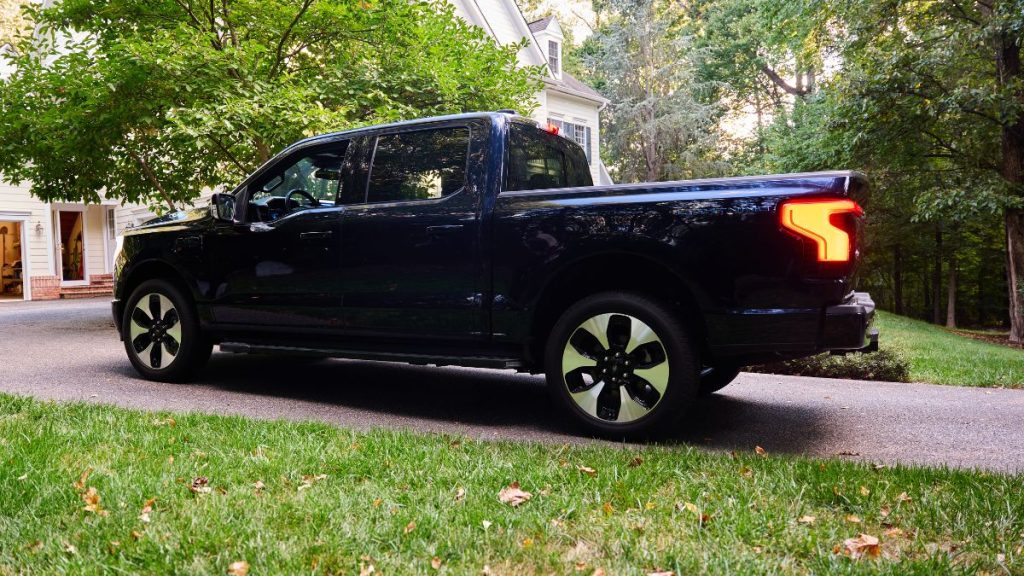
In the U.S., the Biden administration’s infrastructure act boosted domestic battery production and fast-charging networks. Cultural acceptance accelerated dramatically with the electrification of trucks: the Ford F-150 Lightning and Rivian R1T normalised EVs in a segment long tied to heavy-duty expectations. For many Americans, electric trucks, not cars, made EVs feel viable.
Meanwhile, medium-duty electric trucks for logistics began rapid expansion. Early entrants, like Volta Trucks, began the transition, ahead of the established manufacturers. Urban delivery fleets shifted en masse to electric vans. Early heavy-duty electric trucks appeared on highways in Europe, China and North America, supported by the first pilots of megawatt-scale charging stations.
Africa’s EV journey reflected its unique context: locally assembled Chinese EVs and electric motorcycles, powered increasingly by solar microgrids. Electric trucks in mining and agriculture appeared early, driven by localised energy economics. Australia’s EV momentum accelerated after 2023, supported by state incentives, cheap solar, and major lithium mining and processing initiatives. The country’s EV fleet expanded rapidly, including widespread adoption of electric utes and electric trucks in rural areas.
The Consolidation Era for EVs (2025 to 2030)
From 2025 onwards, the EV transition became unstoppable. EVs exceeded 70% of new car sales in advanced markets. Battery recycling industrialised. Solid-state technology entered early mass-production. Falling costs tipped purchasing economics decisively in favour of electric.
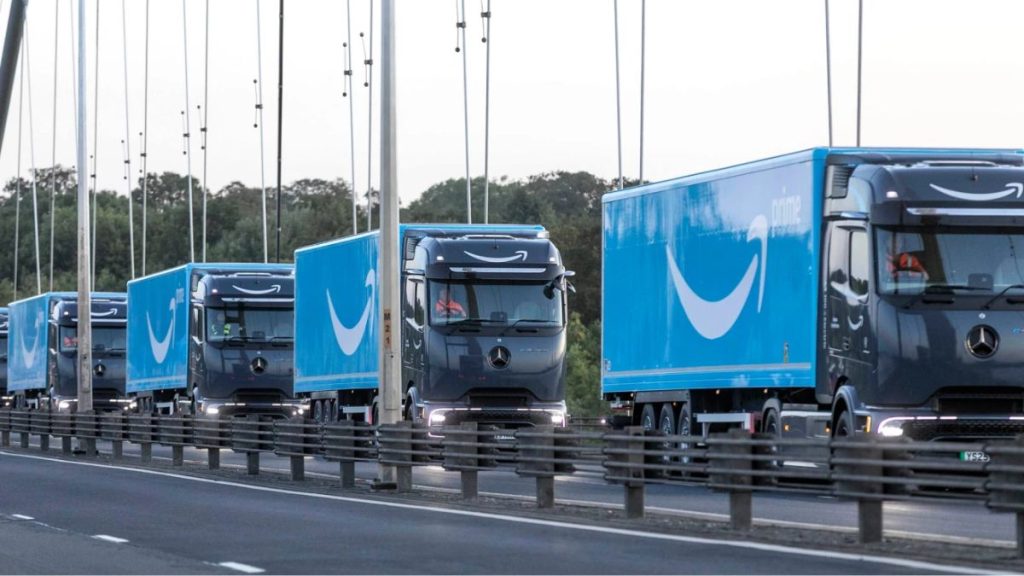
Electric trucks, too, reached a defining moment. Medium-duty electric freight vehicles became standard for logistics operators. Major cities implemented zero-emission delivery zones. Heavy-duty electric trucks, once seen as nearly impossible, became commercially viable following breakthroughs in battery density and the rollout of megawatt-scale charging corridors across Europe, China, and the United States. Ports and logistics hubs transitioned rapidly to zero-emission drayage fleets.
And alongside this, a new transformation unfolded: the rise of V2G and smart grids. By 2030, millions of EVs were connected to grid services. Cars and vans in driveways balanced residential energy demand. Electric buses served as emergency storage during storms. Commercial electric truck depots became vast stabilisation centres for local grids. The public began to understand EVs not simply as vehicles, but as energy assets. By 2030, the majority of advanced markets defined a ‘vehicle’ as electric by default.
The Integration Era of Electric Vehicles (2030 to 2035)
The years leading into 2035 witnessed the full integration of mobility and energy. Smart grids matured as intelligent, adaptive energy systems able to dynamically use millions of EV batteries as flexible storage. Homes, businesses and entire districts relied on V2G services for resilience, especially during extreme weather events.
Passenger cars charged when renewable energy was abundant and supplied energy back to the grid when needed. Fleet depots became energy hubs. Heavy-duty electric trucks – with their immense battery capacities – emerged as some of the largest mobile energy-storage units ever deployed, contributing significantly to grid stability in Europe, China and parts of North America.
Rural communities adopted EV-powered microgrids using solar and battery storage, often centred on electric trucks for both mobility and backup supply. Nations with high renewable penetration relied on EVs to smooth seasonal imbalances. By 2035, the boundaries between transportation and energy had dissolved. EVs had become energy infrastructure.
Legacy and Outlook for EVs from 2035
Seen from 2035, the history of EVs is a story of convergence: a merging of technology, policy, economics, cultural change and environmental necessity. What began as a niche innovation in the 19th century evolved into one of the most significant transformations in modern industrial history. Cars, vans, buses and trucks became more than mobility tools – they became elemental parts of a new energy ecosystem.
All this, set against the backdrop of persuading mainstream consumers and drivers to transition from a form that they had known all their lives and that was a key tool in their sense of individual liberty and freedom.
Europe and the UK demonstrated the power of regulatory ambition. The United States showed how innovation and consumer culture – especially around trucks – could drive electrification at scale. China reshaped the global automotive landscape through industrial strategy. Japan brought reliability and hybrid lessons to BEV maturity. Africa aligned electrification with renewable microgrids and local adaptation. Australia and China supplied the minerals that made it all possible.
From the hesitant experiments of the 1800s to the integrated EV-smart-grid systems of 2035, the journey reshaped transportation, the global energy system and the geopolitical balance of the 21st century. EVs did not merely replace combustion vehicles – they redefined the relationship between mobility, power, climate and society itself.
A thought leadership piece by Ade Thomas.